Must Visit
Cretto di Burri
Alberto Burri · 2015
ArchitectAlberto Burri
Year2015
LocationGibellina, Italy
Coordinates37.7878° N, 12.9716° E
TypeInstallation · Permanent Installation, Landscape · Landscape Installation
StatusMust Visit
Sign in to save and check in to this place.
About this place
Alberto Burri's monumental land-art memorial over the ruins of Gibellina Vecchia, destroyed by the 1968 Belice earthquake — 85,000 square metres of concrete crazing.
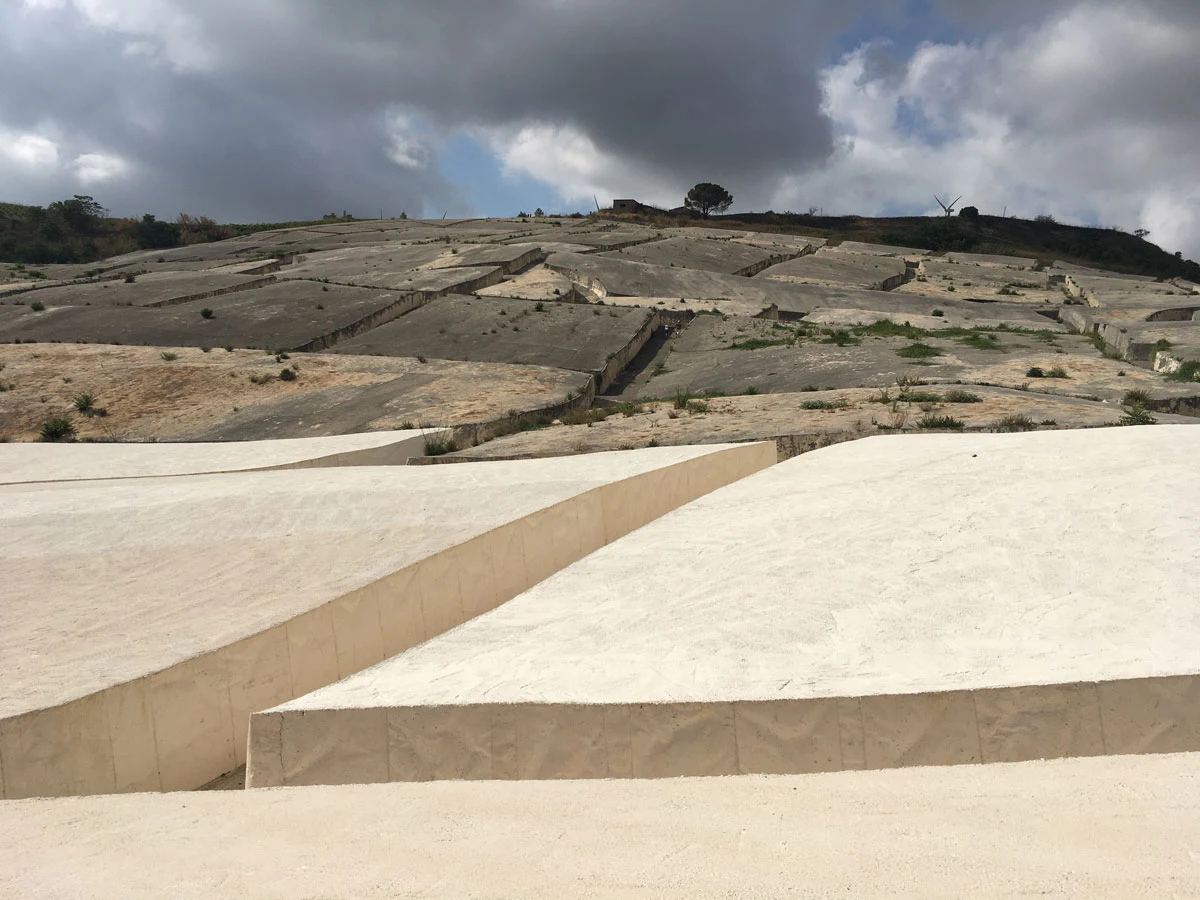
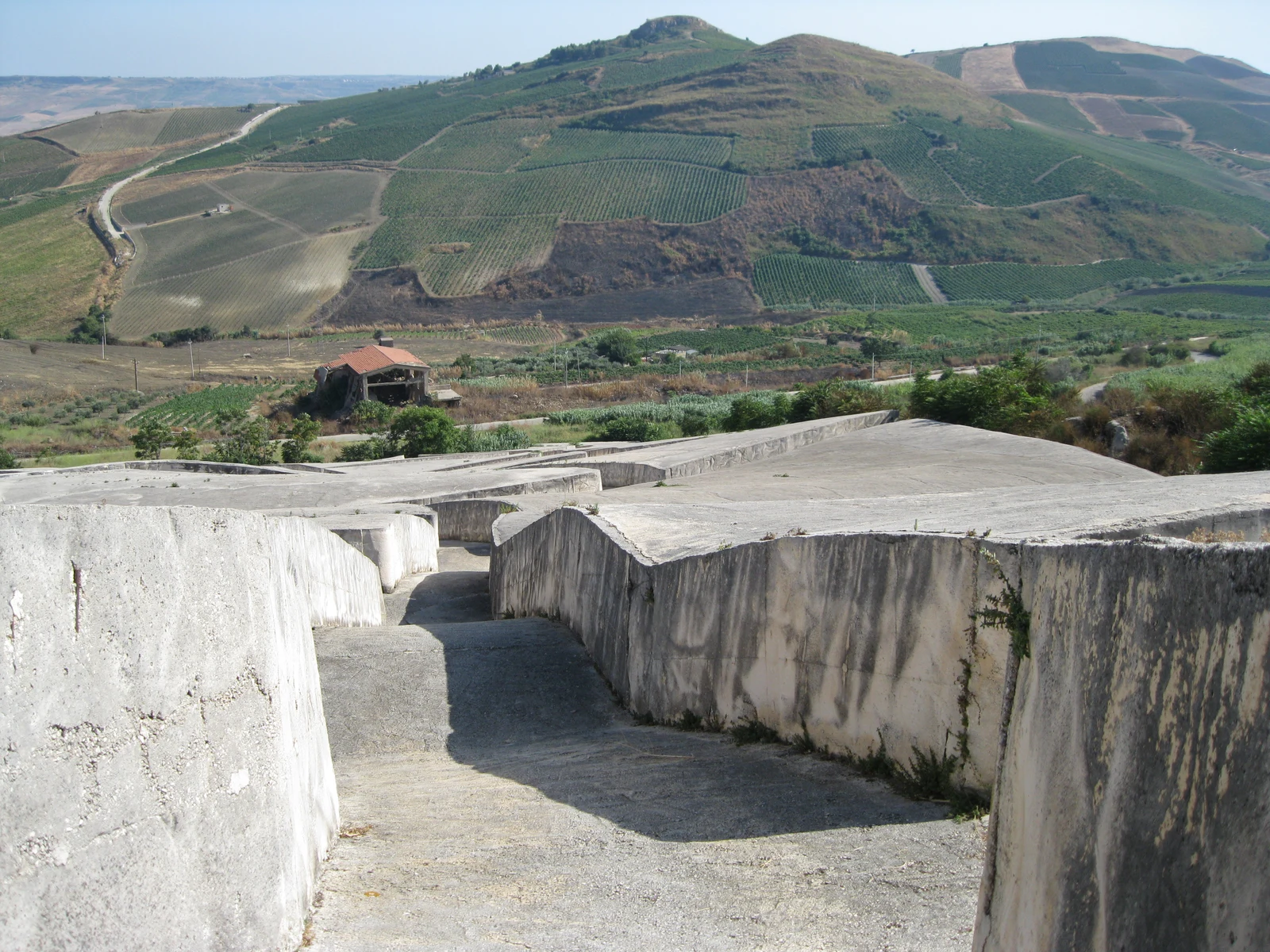
After a devastating 1968 earthquake leveled the Sicilian town of Gibellina, the town was rebuilt from scratch nearby — but rather than let the ruins of the old town simply vanish, artist Alberto Burri proposed encasing them entirely in concrete. Begun in 1984, the Cretto di Burri (or Grande Cretto) pours a thick layer of white concrete directly over the compacted rubble of the original streets and building footprints, then cracks it into a vast network of fissures that trace the town's former urban plan — its lanes preserved as walkable channels between huge concrete blocks.
The project stalled for decades after Burri's initial phase, and funding ran out before it was declared complete; the artist died in 1995 without seeing it finished. Only in 2015, more than 30 years after the first pour, was the roughly 85,000-square-metre cretto substantially completed, becoming one of the largest land-art works in the world and a rare instance of an entire vanished town rendered as a single sculptural field.
Walking the Cretto means walking the exact streets of a town that no longer exists, at full scale, its rooms and blocks legible only as absences between the fractured white slabs. It is simultaneously a memorial, a ruin, and an abstract sculpture — among the starkest and most moving works to emerge from Italy's tradition of Arte Povera, and reason enough on its own for a detour into the interior of western Sicily.
Installation · Permanent InstallationLandscape · Landscape Installation
Comments
Sign in to leave a comment.
Access conditions may change. Please check current opening and access information with the venue before visiting.
Something wrong or missing?