Worth Visiting
Dongdaemun Design Plaza
Zaha Hadid Architects · 2014
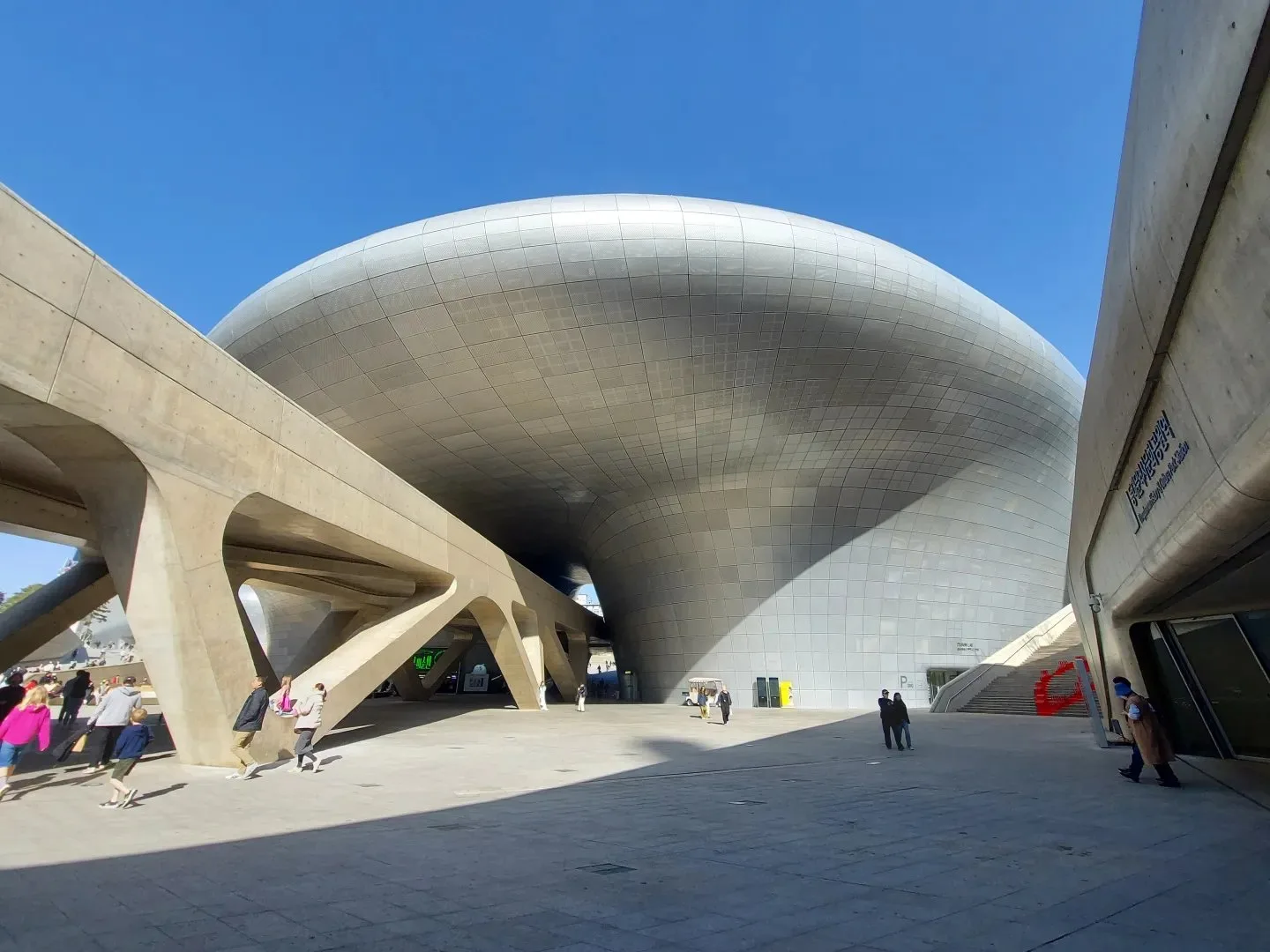
FIG. 01
ArchitectZaha Hadid Architects
Year2014
LocationSeoul, South Korea
Coordinates37.5665° N, 127.0092° E
TypeArchitecture · Contemporary Architecture, Culture · Cultural Center, Public Space · Urban Intervention
StatusWorth Visiting
Sign in to save and check in to this place.
About this place
Zaha Hadid's 86,000 m² cultural complex is Seoul's most radical contemporary landmark — 45,133 curved aluminum panels forming an unbroken surface that dissolves building, ground and landscape.
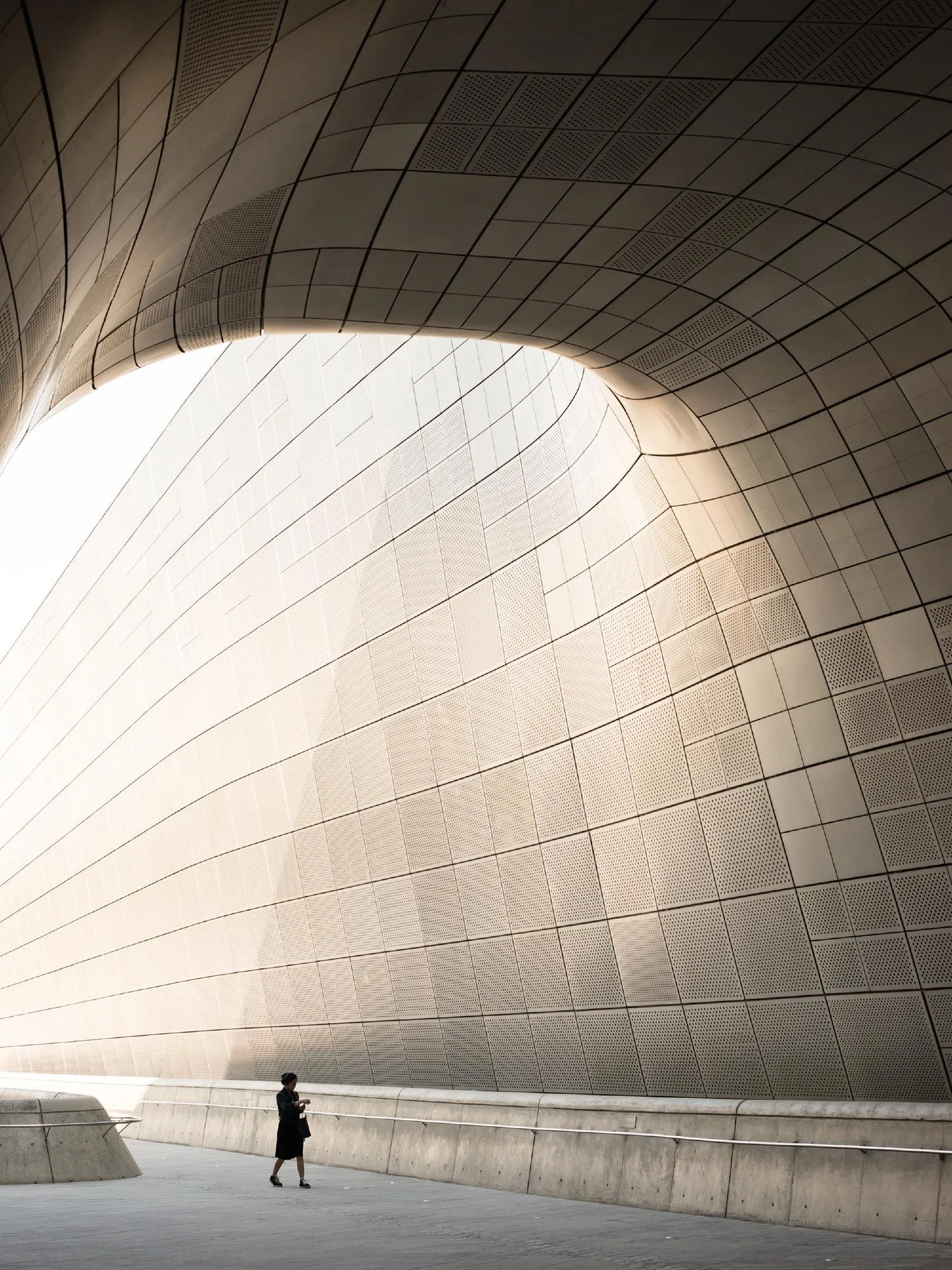
DDP is one of the most ambitious built works of Zaha Hadid Architects — a continuous, free-form surface of 45,133 curved aluminum panels wrapped around a building complex of 86,574 square metres. Completed in 2014 on the site of the former Dongdaemun Stadium, the design obliterates the conventional distinction between building, ground, and landscape: the roof slopes into park terraces, walls dissolve into ceilings, and the interior flows as a single, uninterrupted spatial field.
The complex contains a design museum, multiple exhibition halls, convention facilities, and a design market, but the spatial experience transcends program. What makes DDP worth visiting is not any individual room but the movement between them — ramps that spiral into galleries, thresholds that appear without walls, the constant surprise of a geometry that refuses to resolve into anything orthogonal.
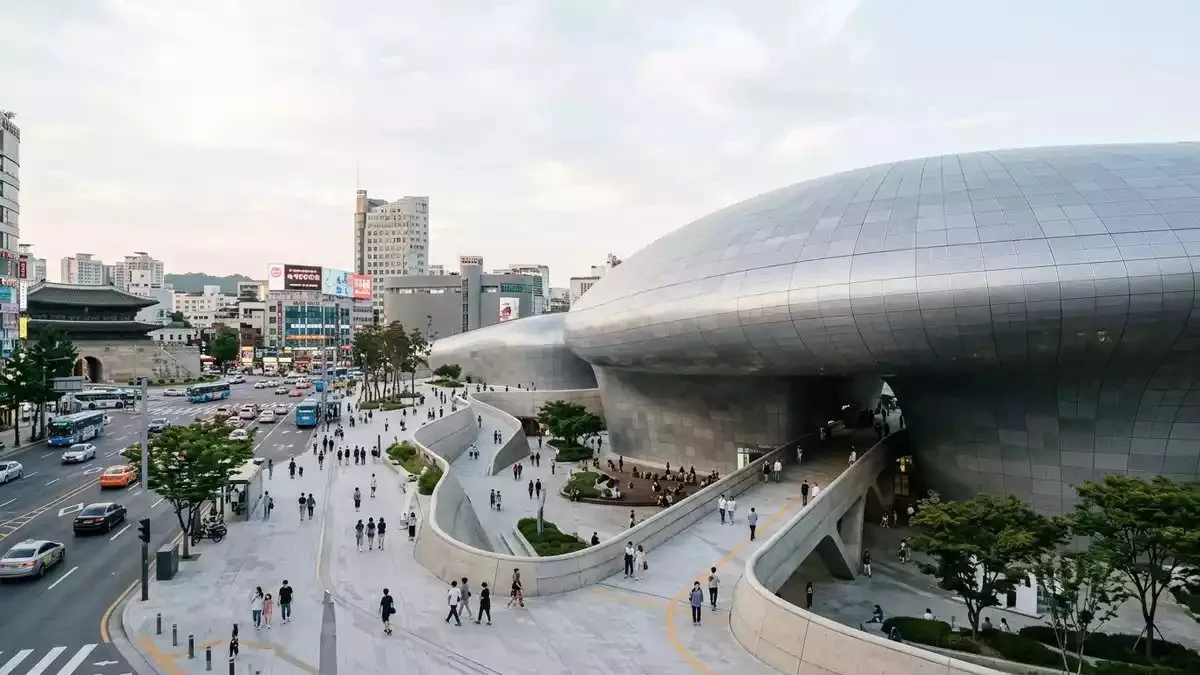
The site itself adds a further layer. Excavation during construction uncovered foundations of Joseon-era city walls, now partially visible through a landscaped history park at the building's perimeter. This juxtaposition of 14th-century stone and 21st-century parametric surface is most legible at dusk, when the aluminum skin takes on a soft luminescence and the old walls are lit from below.
The surrounding Dongdaemun fashion district operates around the clock. DDP's irregular form and illuminated surfaces mean it reads differently at midnight than at noon — both are worth experiencing. The building's relationship to its context is contentious: the scale disrupts the street fabric and the programme is diffuse, but as a single spatial argument about what a public building can be, it remains unmatched in Seoul.
Architecture · Contemporary ArchitectureCulture · Cultural CenterPublic Space · Urban Intervention
More in SeoulAll →
Comments
Sign in to leave a comment.
Access conditions may change. Please check current opening and access information with the venue before visiting.
Something wrong or missing?