Worth Visiting
Four Cubes to Contemplate Our Environment
Tadao Ando · 2011
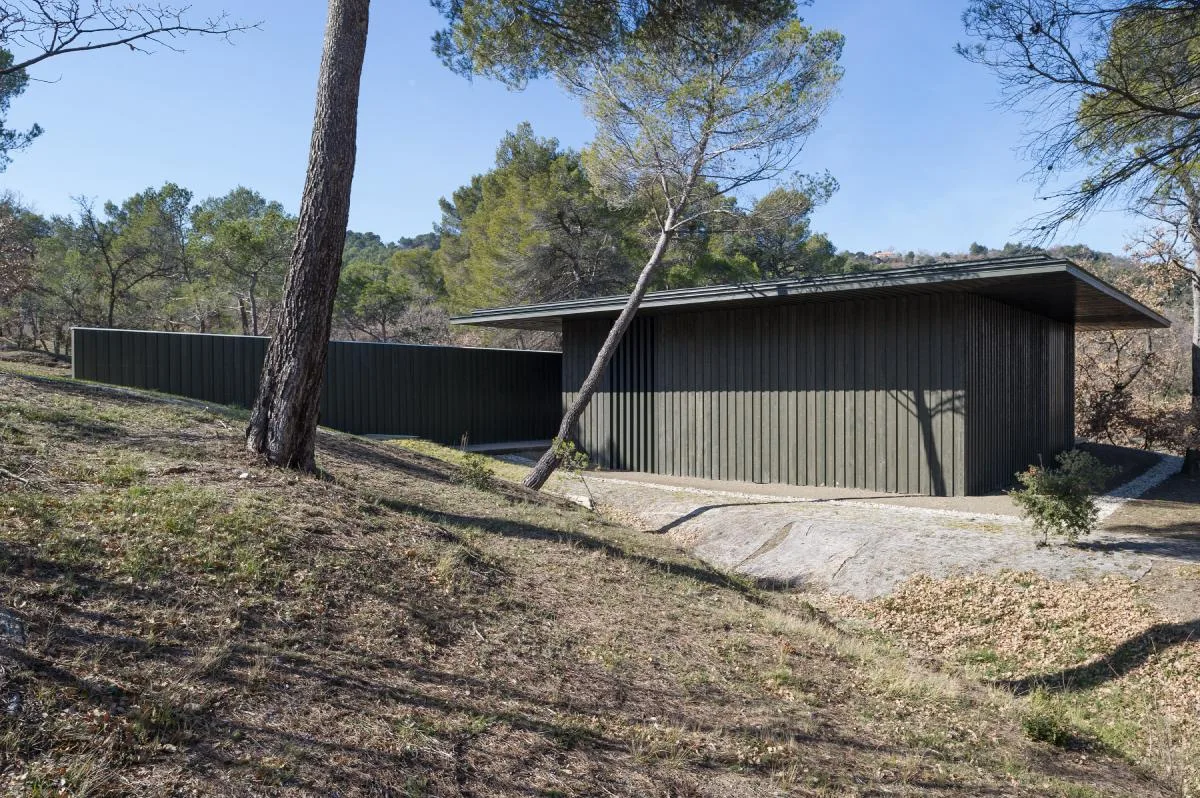
FIG. 01
ArchitectTadao Ando
Year2011
LocationLe Puy-Sainte-Réparade, France
Coordinates43.6300° N, 5.4360° E
TypeInstallation · Public Art
StatusWorth Visiting
Sign in to save and check in to this place.
About this place
Permanent pavilion by Tadao Ando housing four glass cubes — each representing carbon dioxide, water, waste, and air. Visitors pass through a dim corridor before encountering the cubes floating in darkness. First shown at the Kennedy Center in 2008.
Tadao Ando's Four Cubes — full title: Four Cubes to Contemplate Our Environment — began as a temporary installation at the Kennedy Center in Washington DC during the 2008 Japan Festival, before finding its permanent home at Château La Coste in Provence.
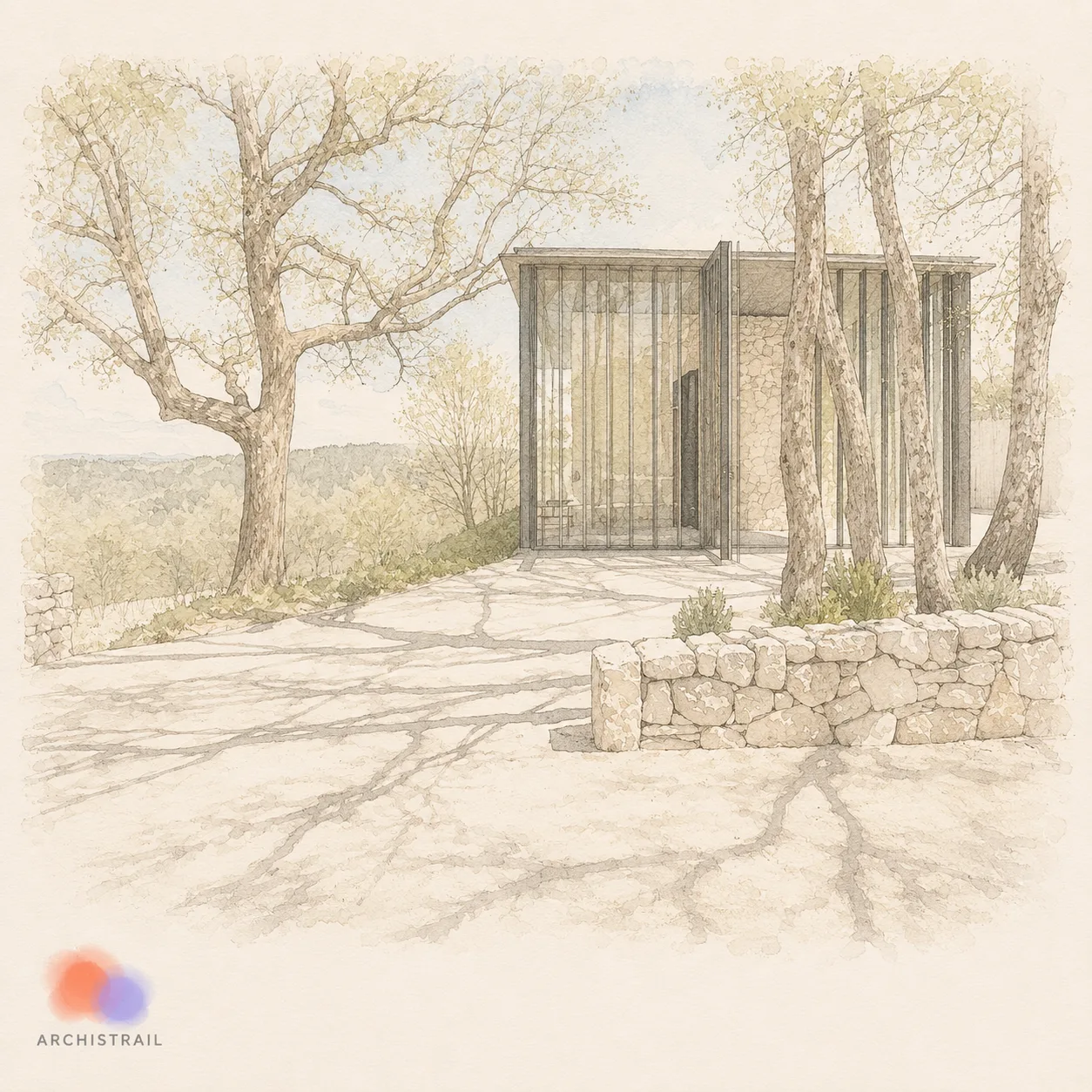
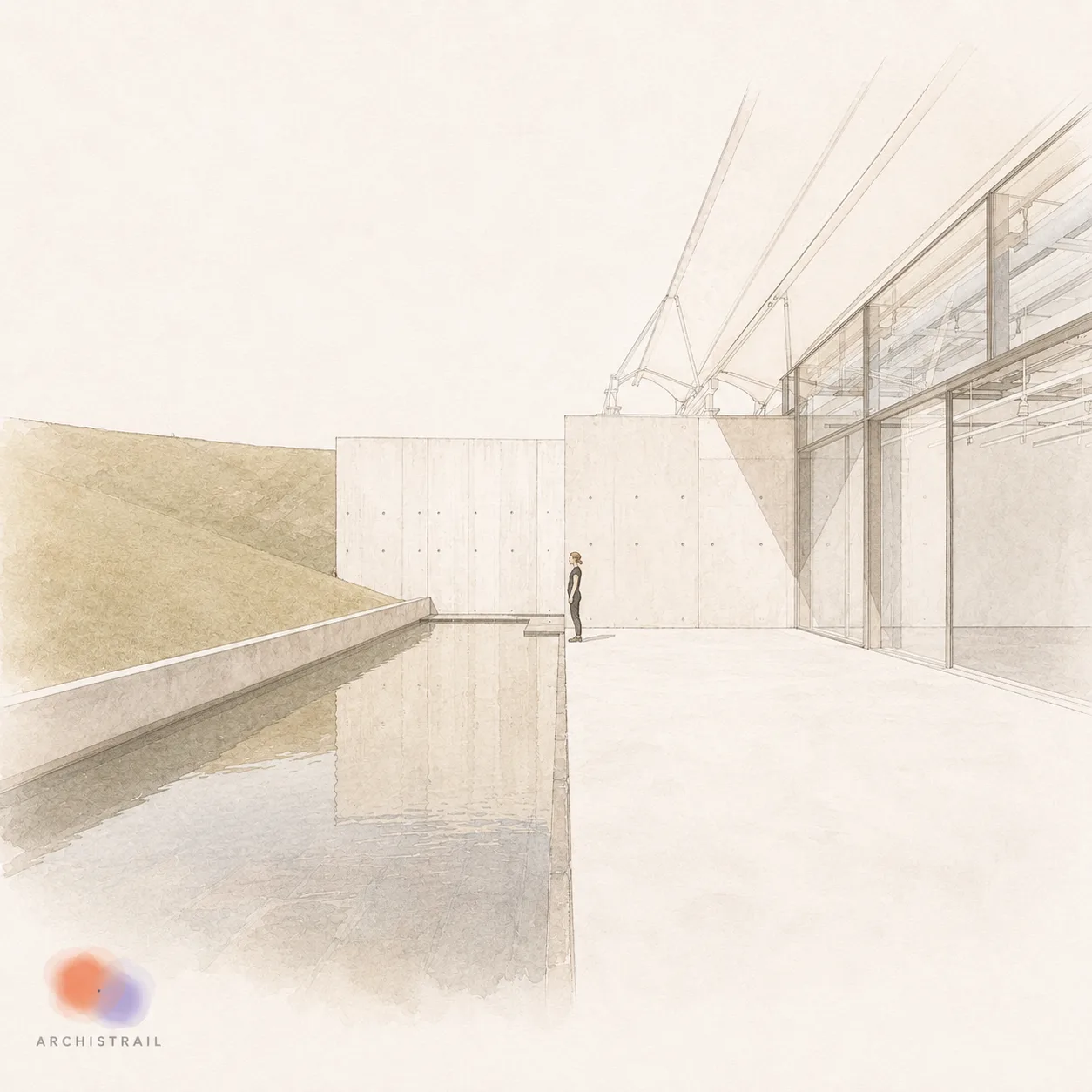
The pavilion is a building of sequences. Visitors approach a blank concrete enclosure, then enter a dim corridor running along its perimeter — eyes adjusting, pace slowing. The corridor eventually gives way to the central chamber, where four two-metre glass cubes float in near-darkness. Each cube carries a single environmental theme: carbon dioxide, water, waste, air. The effect is simultaneously minimal and theatrical.
The architecture serves the installation without overwhelming it. Ando's concrete is present — precise, smooth, marked by circular tie-holes in their characteristic grid — but it functions here as context rather than protagonist. The darkness is structural: it makes the cubes luminous, gives them weight, turns an environmental message into a spatial experience.
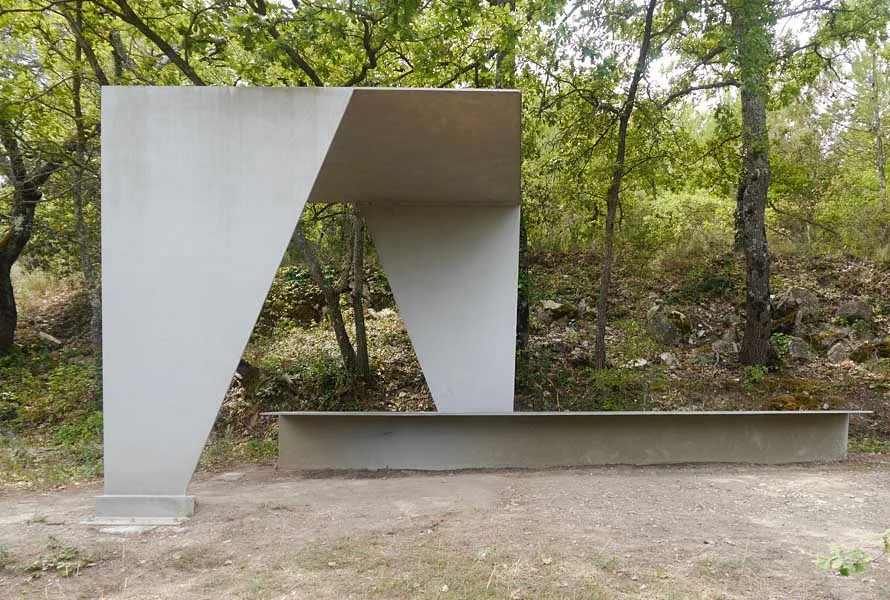
The pavilion sits on the vineyard trail at Château La Coste alongside the architect's other permanent works — the Art Centre, the Chapel, the Origami Benches — making the estate arguably the densest single concentration of Ando's outdoor work anywhere in Europe.
Installation · Public Art
More in Le Puy-Sainte-RéparadeAll →
Comments
Sign in to leave a comment.
Access conditions may change. Please check current opening and access information with the venue before visiting.
Something wrong or missing?