Must Visit
Honpukuji Watertemple
Tadao Ando · 1991
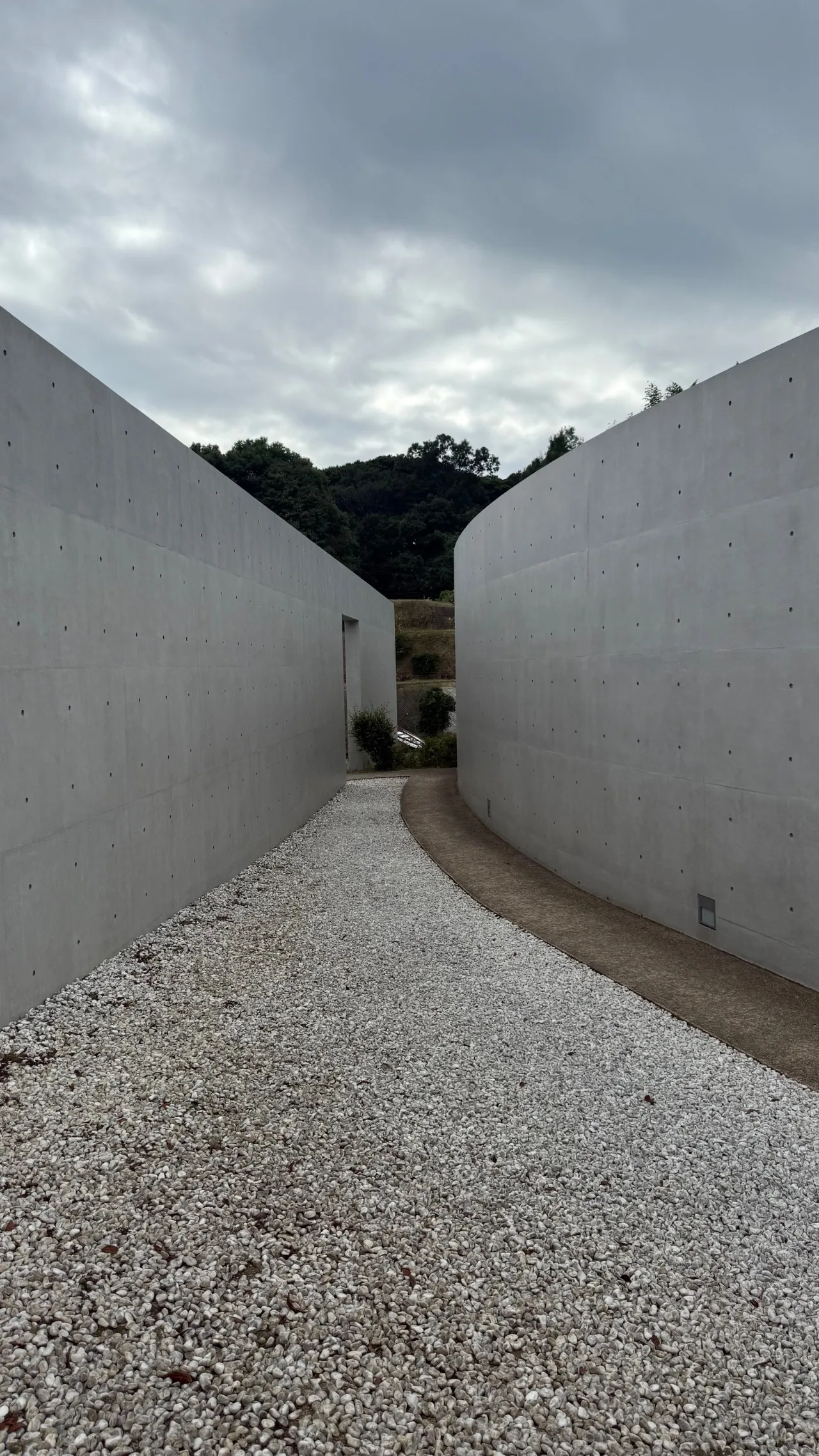
FIG. 01
ArchitectTadao Ando
Year1991
LocationAwaji, Japan
Coordinates34.5465° N, 134.9891° E
TypeArchitecture · Religious Building
StatusMust Visit
Sign in to save and check in to this place.
About this place
Honpukuji’s Water Temple (Mizumido) on Awaji Island is a modern concrete Buddhist sanctuary by Tadao Ando, famed for its water-filled, maze-like interior drama.
Honpukuji Temple—known for its Water Temple (Mizumido)—stands on Awaji Island in Hyōgo Prefecture, overlooking Osaka Bay. While the broader temple tradition is rooted in Shingon Buddhism, the Water Temple is what has made the place internationally memorable: a purpose-built, atmosphere-heavy sacred interior designed to shape movement, light, and perception.
The Water Temple’s architecture is credited to Tadao Ando, whose approach brought a stark modern sensibility to a Buddhist program. Rather than presenting a ceremonial hall as an object on display, the building works like an experiential vessel—one where a labyrinth-like arrangement and the presence of water become part of worship. Visitors encounter a carefully controlled sequence of spaces before reaching the enshrined focus.
What makes Honpukuji particularly significant in an architecture atlas is the way it bridges typology and technique: a contemporary concrete form housing an older devotional logic. In practice, the Water Temple reads as both a renewed temple building and a landmark example of how modern architecture can be engineered to intensify religious experience without turning the sacred into spectacle.
Architecture · Religious Building
Nearby places
More in AwajiAll →
No other places in Awaji yet.
Comments
Sign in to leave a comment.
Access conditions may change. Please check current opening and access information with the venue before visiting.
Something wrong or missing?