Visit if Near
Ibexmuseum
Rainer Köberl · 2020
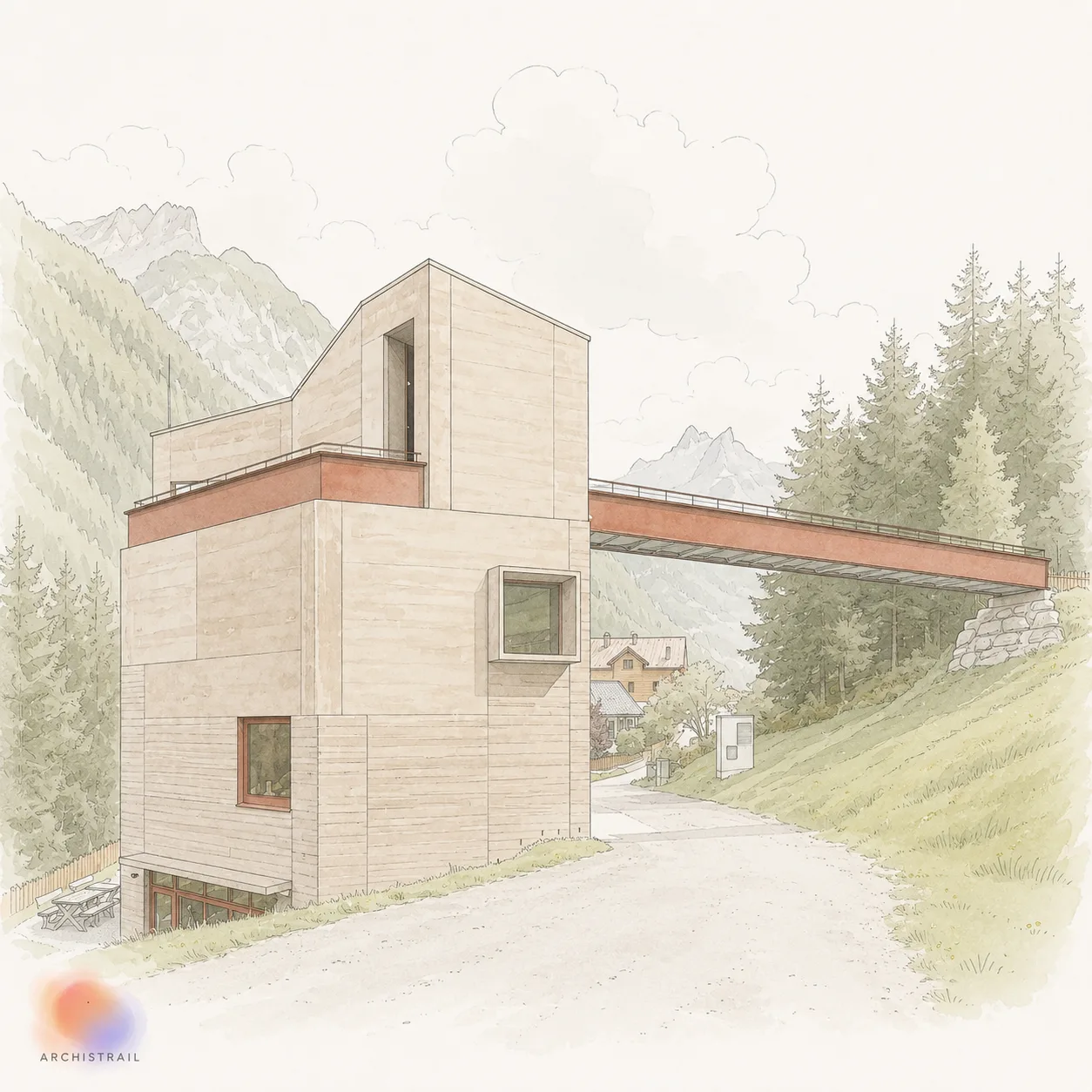
FIG. 01
ArchitectRainer Köberl
Year2020
LocationSt. Leonhard im Pitztal, Austria
Coordinates47.0838° N, 10.8673° E
TypeCulture · Museum, Architecture · Museum Building
StatusVisit if Near
Sign in to save and check in to this place.
About this place
Rainer Köberl's compact museum dedicated to the Alpine ibex in the Tyrolean Pitztal — a precisely crafted building documenting the ibex's near-extinction and recovery in the Alps.
The Ibexmuseum in St. Leonhard im Pitztal occupies a narrow building in the centre of a small Tyrolean village, designed by Rainer Köberl — one of the most thoughtful architects working in the Austrian Alps. The museum documents the history of the Alpine ibex (Steinbock), a species hunted to near-extinction across the Alps by the nineteenth century and recovered only through intensive conservation programmes over the following hundred years.
The Pitztal is one of the valleys where ibex populations still exist in significant numbers, and the museum's location within the community that lives alongside them gives the institution an authenticity that a larger, city-based natural history museum could not replicate. The permanent exhibition traces the ecology, behaviour, and cultural significance of the ibex, alongside the political and territorial negotiations that made its recovery possible.
Köberl's architecture responds to the alpine context without resorting to vernacular pastiche. The building is compact and precisely detailed — the materials and the handling of light reflect a sensibility more interested in careful adjacency to the landscape than in dramatic gesture. The interior is quietly absorbing: small rooms, carefully positioned openings, and displays that reward time spent with individual objects and specimens.
The museum is a destination for visitors already in the Pitztal — for skiing, hiking, or glacier access — rather than a reason to make a separate journey. Within that context it is unusually rewarding, and the architecture is consistently cited as one of Köberl's most accomplished smaller works.
Culture · MuseumArchitecture · Museum Building
More in St. Leonhard im Pitztal
Comments
Sign in to leave a comment.
Access conditions may change. Please check current opening and access information with the venue before visiting.
Something wrong or missing?