Must Visit
Kolumba Museum
Peter Zumthor · 2007
ArchitectPeter Zumthor
Year2007
LocationCologne, Germany
Coordinates50.9387° N, 6.9540° E
TypeCulture · Museum, Architecture · Museum Building
StatusMust Visit
Sign in to save and check in to this place.
About this place
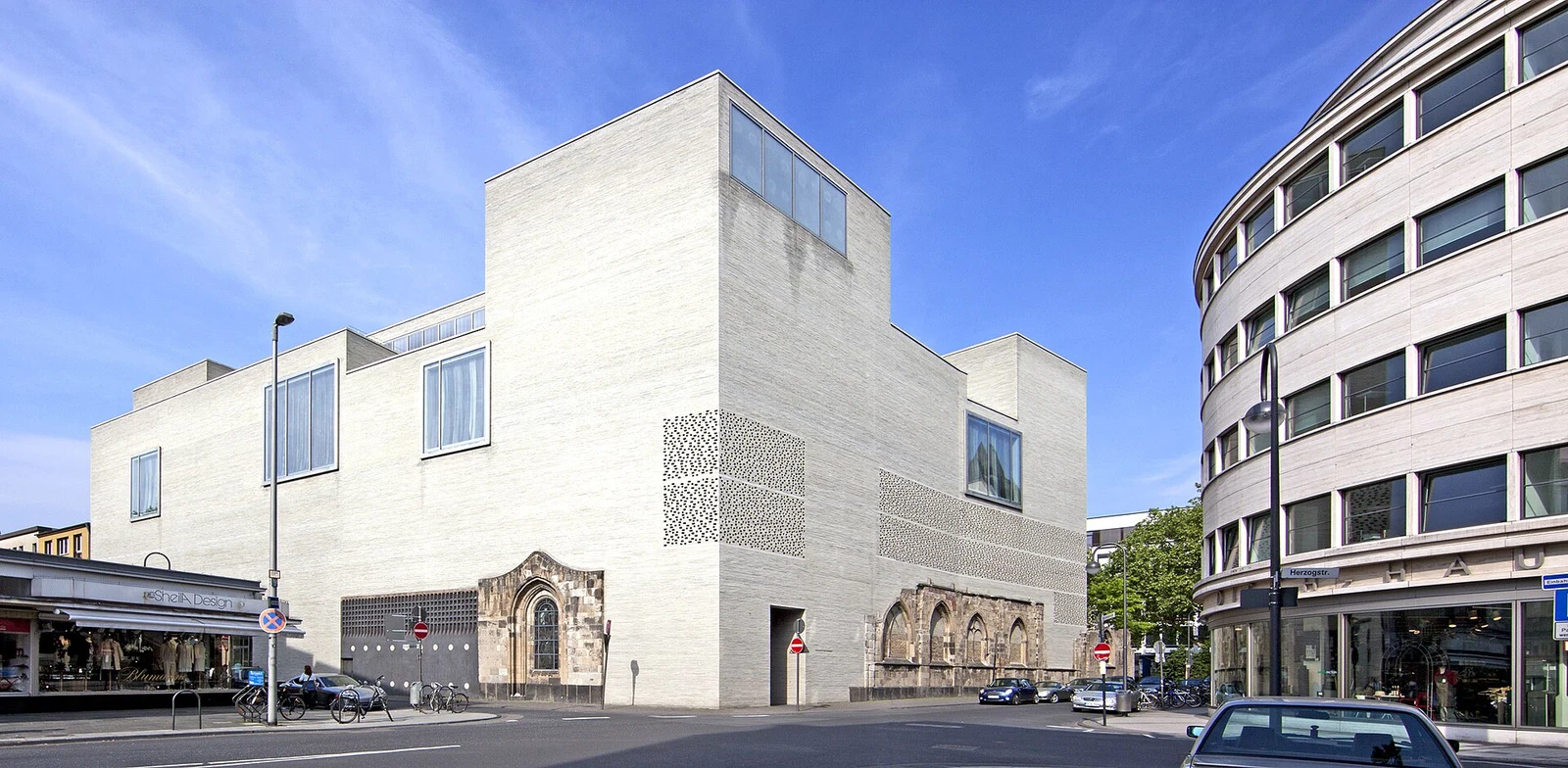
Peter Zumthor’s 2007 art museum for the Archdiocese of Cologne, rising in soft grey brick over the ruins of a Gothic church — a perforated skin filtering light onto excavated layers of the city.
Kolumba, the art museum of the Archdiocese of Cologne, opened in 2007 to a design by Peter Zumthor, and is one of the most quietly powerful museum buildings in Europe. It is built directly over the ruins of the late-Gothic church of St. Kolumba, destroyed in the war, and the 1950s chapel ‘Madonna in the Ruins’ that stood among them. Zumthor’s response was not to clear the site but to grow a new building out of it, in a slim, pale grey handmade brick — the so-called ‘Kolumba brick’ — that rises seamlessly from the medieval stone walls.
The ground floor is an archaeological hall where a zig-zag walkway floats above the excavated remains of Roman, medieval and modern Cologne, lit through a vast perforated brick screen that lets daylight and air filter in like a slow grey rain. Above, a sequence of hushed, top-lit galleries shows the diocese’s collection — medieval to contemporary — without labels or hierarchy, setting a Romanesque carving beside a modern installation. Materials are everything here: leather, oak, plaster, terrazzo and brick, all detailed with Zumthor’s obsessive care. The result is less a museum than a place for slow looking, where architecture, ruin and art are held in a single contemplative atmosphere.
Culture · MuseumArchitecture · Museum Building
Nearby places
More in CologneAll →
No other places in Cologne yet.
Comments
Sign in to leave a comment.
Access conditions may change. Please check current opening and access information with the venue before visiting.
Something wrong or missing?