Worth Visiting
Pavillon Pierre Lassonde
OMA / Shohei Shigematsu · 2016
ArchitectOMA / Shohei Shigematsu
Year2016
LocationQuébec, Canada
Coordinates46.8009° N, 71.2253° W
TypeArchitecture · Contemporary Architecture, Culture · Museum
StatusWorth Visiting
Sign in to save and check in to this place.
About this place
OMA's 2016 expansion of the Musée national des beaux-arts du Québec — a glass-and-concrete pavilion that bridges the historic Grande Allée and the Battlefields Park.
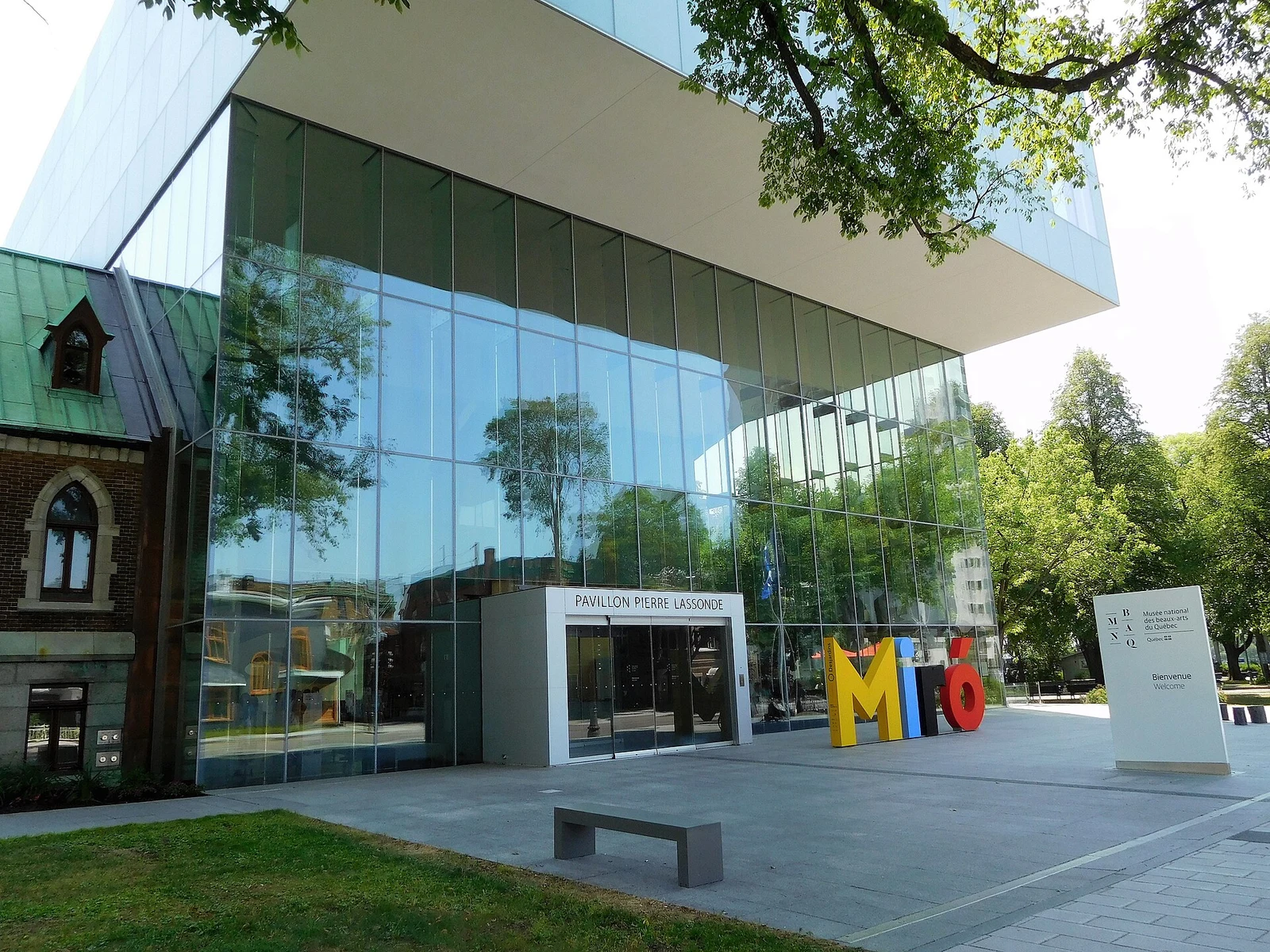
The Pavillon Pierre Lassonde is OMA's contribution to the Musée national des beaux-arts du Québec (MNBAQ), completed in 2016 under the direction of Shohei Shigematsu. It stands at the threshold between two worlds: the historic urban fabric of Grande Allée to the north, and the vast Battlefields Park — the Plains of Abraham — to the south.
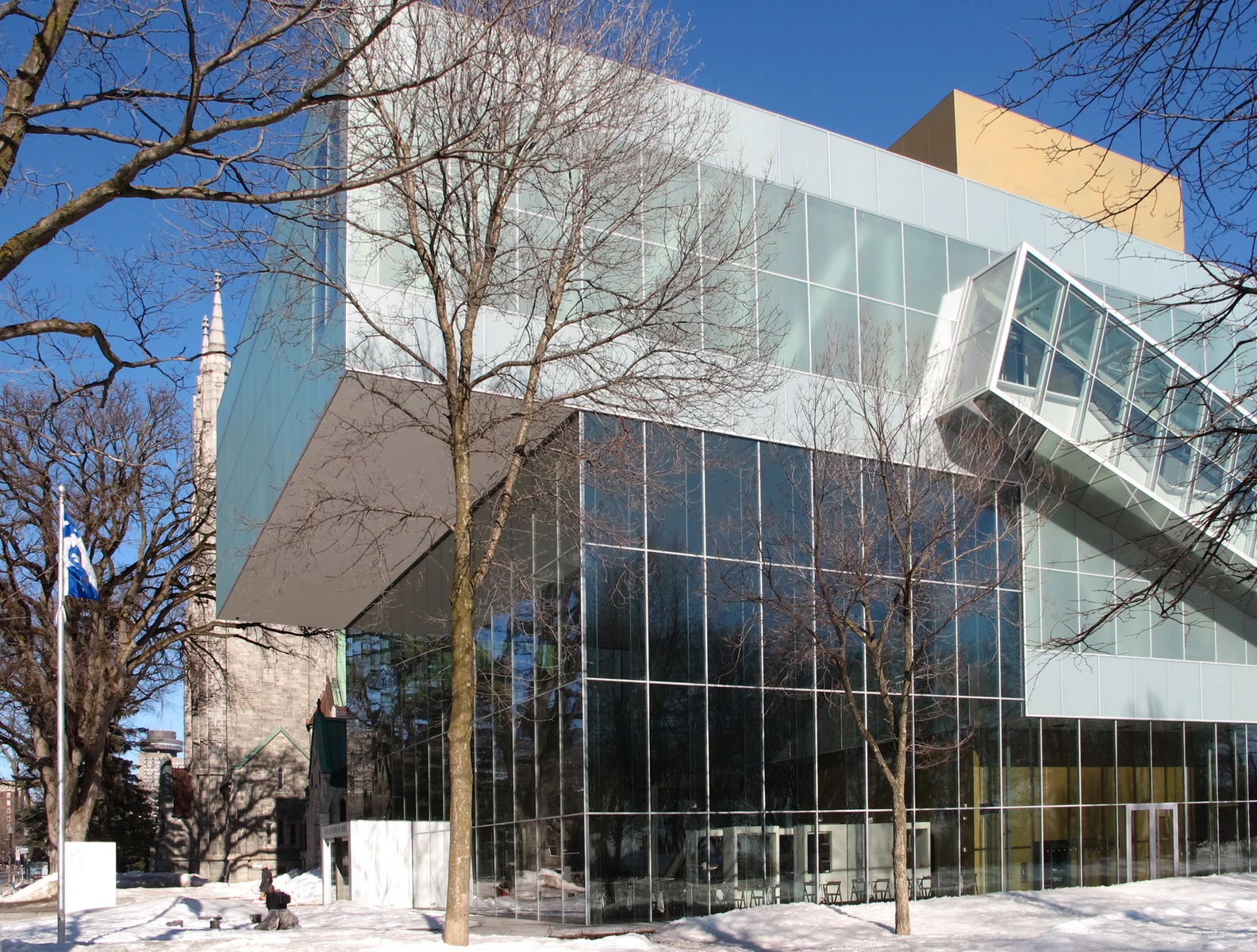
The building's form is generated by this dual orientation. A series of stacked and cantilevered volumes in glass and concrete step down from the street toward the park, each floor offset from the one below. The result is a building that reads differently from every angle: an angular mass from the street, a transparent layered structure from the park. The floor-to-ceiling glazing on the park side means the landscape is always present from within.
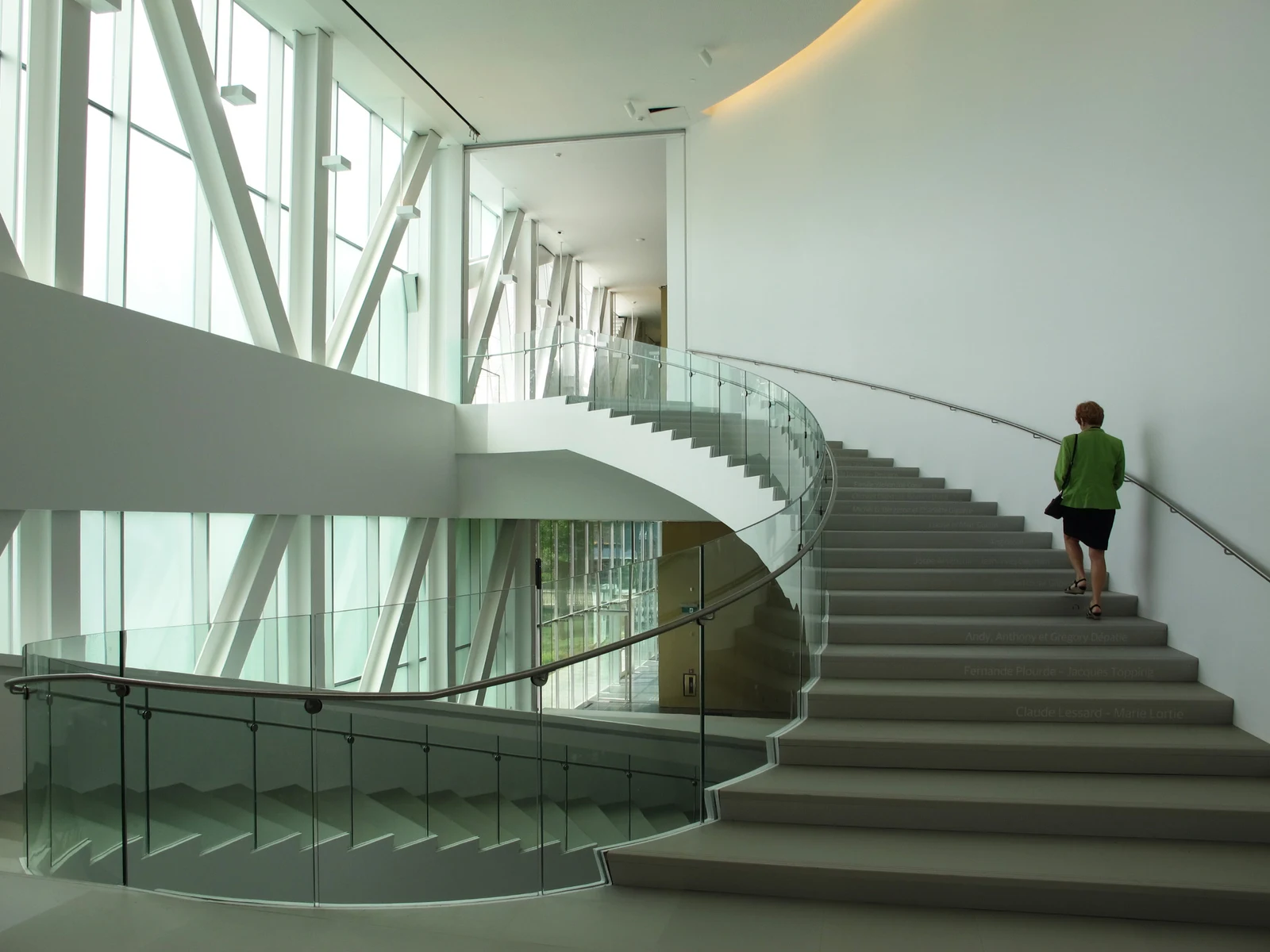
Inside, the spatial organisation is vertical rather than horizontal. A dramatic curved staircase — visible from both inside and out — connects the floors and functions as a public promenade through the building. The galleries are arranged to allow different kinds of natural light on each level: controlled top-light for works on paper and photography, diffuse north light for painting, open glass walls for installation.
The pavilion connects underground to the museum's existing neoclassical building, creating a continuous sequence from the historic institution through the new wing to the park. The integration of new and old — in material, scale, and programme — is among the more thoughtful examples of museum expansion in recent years.
Architecture · Contemporary ArchitectureCulture · Museum
Comments
Sign in to leave a comment.
Access conditions may change. Please check current opening and access information with the venue before visiting.
Something wrong or missing?