Must Visit
Shenzhen Natural History Museum
3XN, B+H Architects, Zhubo Design · 2026
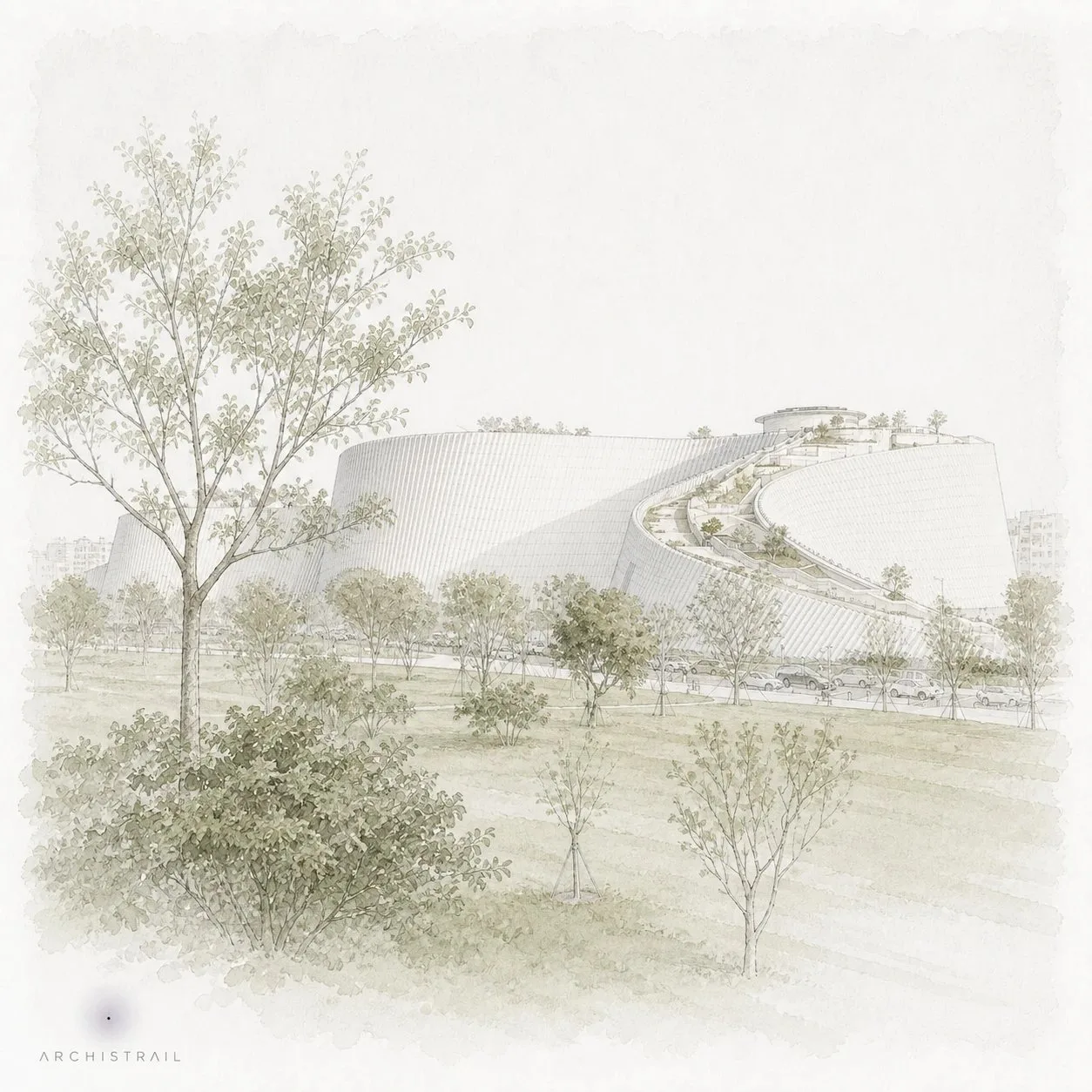
FIG. 01
Architect3XN, B+H Architects, Zhubo Design
Year2026
LocationShenzhen, China
Coordinates22.6954° N, 114.3588° E
TypeCulture · Museum, Architecture · Museum Building
StatusMust Visit
Sign in to save and check in to this place.
About this place
3XN's 105,000 m² natural history museum — five granite-clad cones set within a Yanzi Lake landscape. South China's largest, opened July 2026.
The Shenzhen Natural History Museum is one of the most ambitious natural history institutions to have opened in recent years — a 105,300-square-metre complex on the banks of Yanzi Lake in Shenzhen's Pingshan District, designed by 3XN in collaboration with B+H Architects and Zhubo Design. It opened in July 2026.
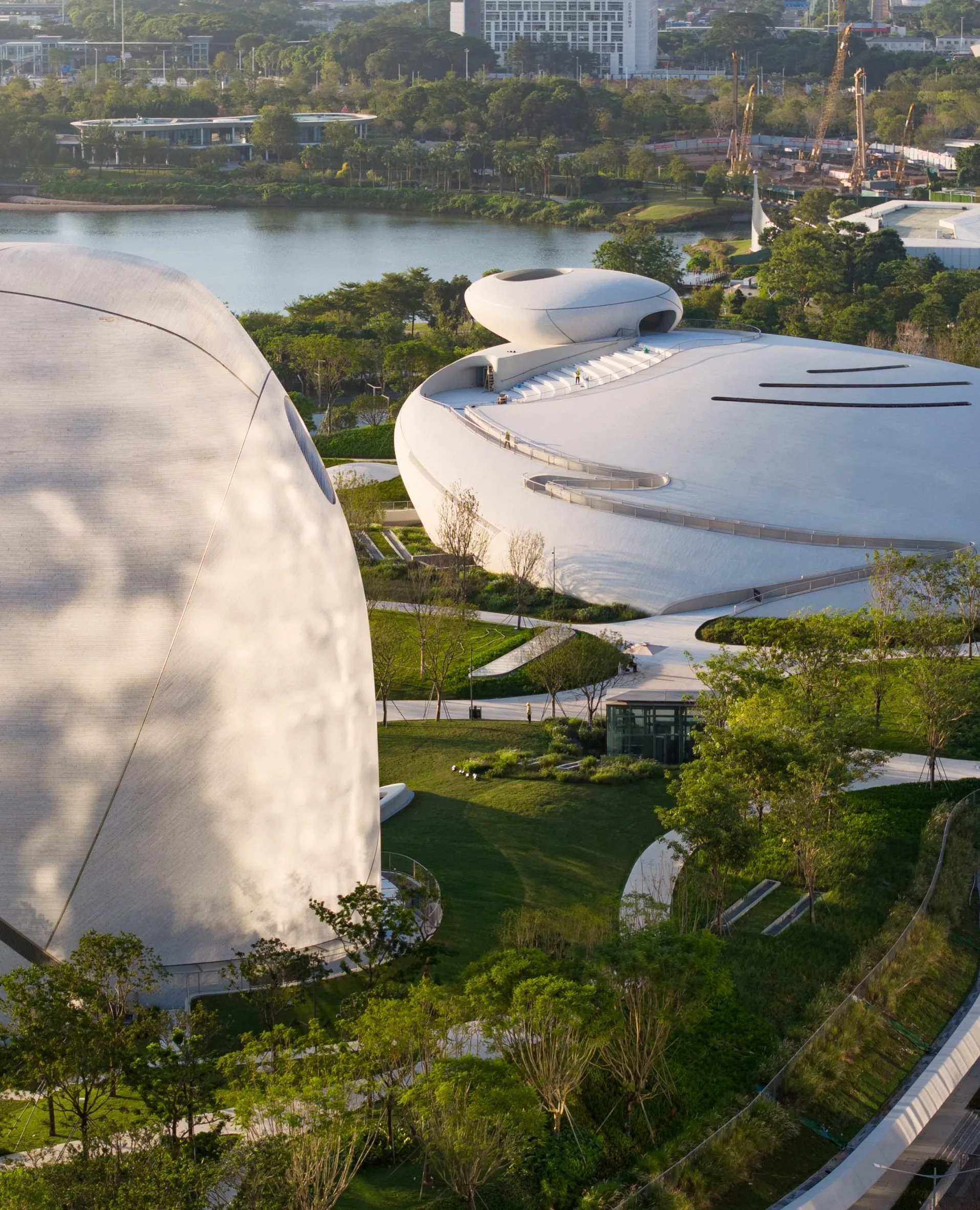
The building's form is generated from the logic of geological landscape: five conical volumes, each clad in rough-textured granite, rise from a continuous ground plane that slopes and folds into publicly accessible rooftop terraces. The governing principle was "nothing in nature is square" — the building avoids orthogonal geometry entirely, substituting organic curves and irregular masses that read, at a distance, as formations rather than construction.
Inside, the five cones structure eight permanent exhibition galleries that move chronologically through 4.6 billion years of Earth's history — from cosmic formation and planetary origins through the emergence of life, the age of dinosaurs, human evolution, and the contemporary ecosystems of South China. The sequence unfolds spatially through cave-like passages, double-height atriums, and spaces framed by views of the surrounding lake and hills. Exhibition design by Atelier Brückner and Museum Studio was developed in close coordination with the architecture from the outset, producing spaces where the building and its contents are genuinely integrated rather than fitted afterward.
The rooftop landscape park is accessible to the public independently of museum hours, extending the building's footprint into the city as civic outdoor space. This relationship with the Yanzi Lake shoreline — the ambition to make the roof as usable as the ground level — is central to the project's character and distinguishes it from the enclosed typology of most major natural history museums.
As a new institutional building, the Shenzhen Natural History Museum sets a high bar: ambitious in scale, coherent at the architectural and exhibition levels, and genuinely public in its relationship with the landscape.
Culture · MuseumArchitecture · Museum Building
Nearby places
More in ShenzhenAll →
Comments
Sign in to leave a comment.
Access conditions may change. Please check current opening and access information with the venue before visiting.
Something wrong or missing?