Visit if Near
St. Moritz Church
John Pawson · 2013
ArchitectJohn Pawson
Year2013
LocationAugsburg, Germany
Coordinates48.3669° N, 10.8977° E
TypeArchitecture · Religious Building, Interior · Experimental Interior
StatusVisit if Near
Sign in to save and check in to this place.
About this place
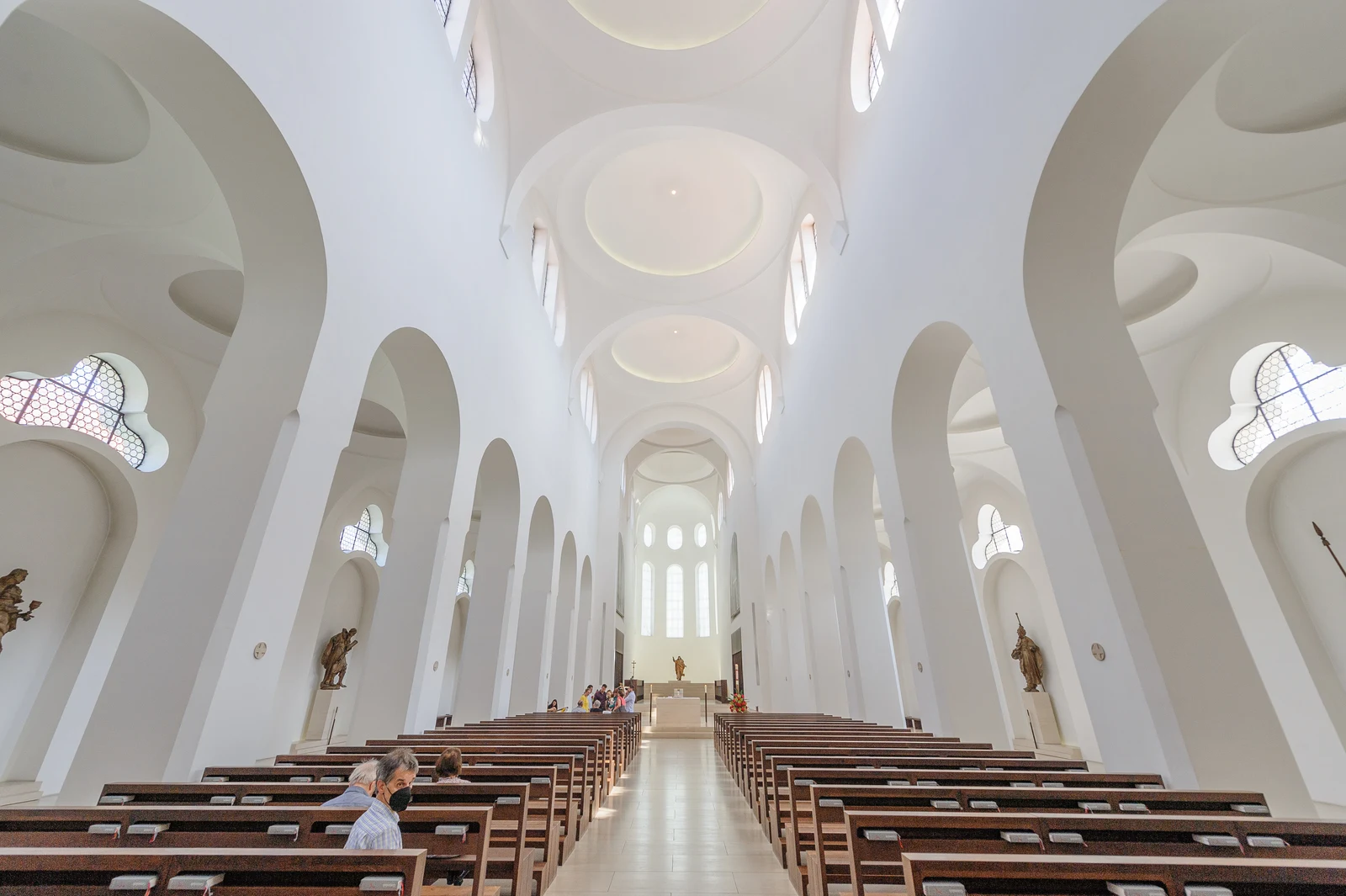
John Pawson's radical renovation of a 17th-century Baroque church in Augsburg, stripped to luminous white stone and completed in 2013. One of the defining sacred interiors of contemporary architecture.
St. Moritz is a Baroque church at the centre of Augsburg, originally built in the early 17th century and heavily damaged in the Second World War. When the Jesuit congregation commissioned John Pawson to carry out a comprehensive renovation, completed in 2013, the result was one of the most discussed sacred interiors of recent years — a space that sits at the intersection of Pawson's minimalist practice and the centuries-old tradition of the stripped Cistercian interior.
Pawson removed the accumulated overlay of postwar repairs and Baroque decoration that had accreted over the original fabric, returning the nave to a condition of luminous austerity. The walls are white, the floor is a single plane of pale stone, the furnishings — altar, font, lectern, benches — are new, designed by Pawson in travertine and oak, and placed with the precision that characterises all his work. The side chapels are preserved but subordinated; the spatial hierarchy of nave, chancel and apse reads clearly and without distraction.
What the renovation achieves is a quality of light that is genuinely rare. The whitened surfaces multiply and distribute the daylight entering through the clerestory windows; the space seems to glow from within rather than being lit from outside. The geometry of the Baroque plan — the rhythm of pilasters, the sweep of the vault — is fully legible because there is nothing competing with it.
The church remains an active parish. Visitors are welcome outside service times, and the contrast between the Baroque exterior and the interior — so quiet, so resolved — is part of the experience.
Architecture · Religious BuildingInterior · Experimental Interior
More in Augsburg
Comments
Sign in to leave a comment.
Access conditions may change. Please check current opening and access information with the venue before visiting.
Something wrong or missing?