Worth Visiting
Villa Tugendhat
Ludwig Mies van der Rohe · 1930
ArchitectLudwig Mies van der Rohe
Year1930
LocationBrno, Czech Republic
Coordinates49.2089° N, 16.6078° E
TypeArchitecture · Modernism, Interior · Residential Interior
StatusWorth Visiting
Sign in to save and check in to this place.
About this place
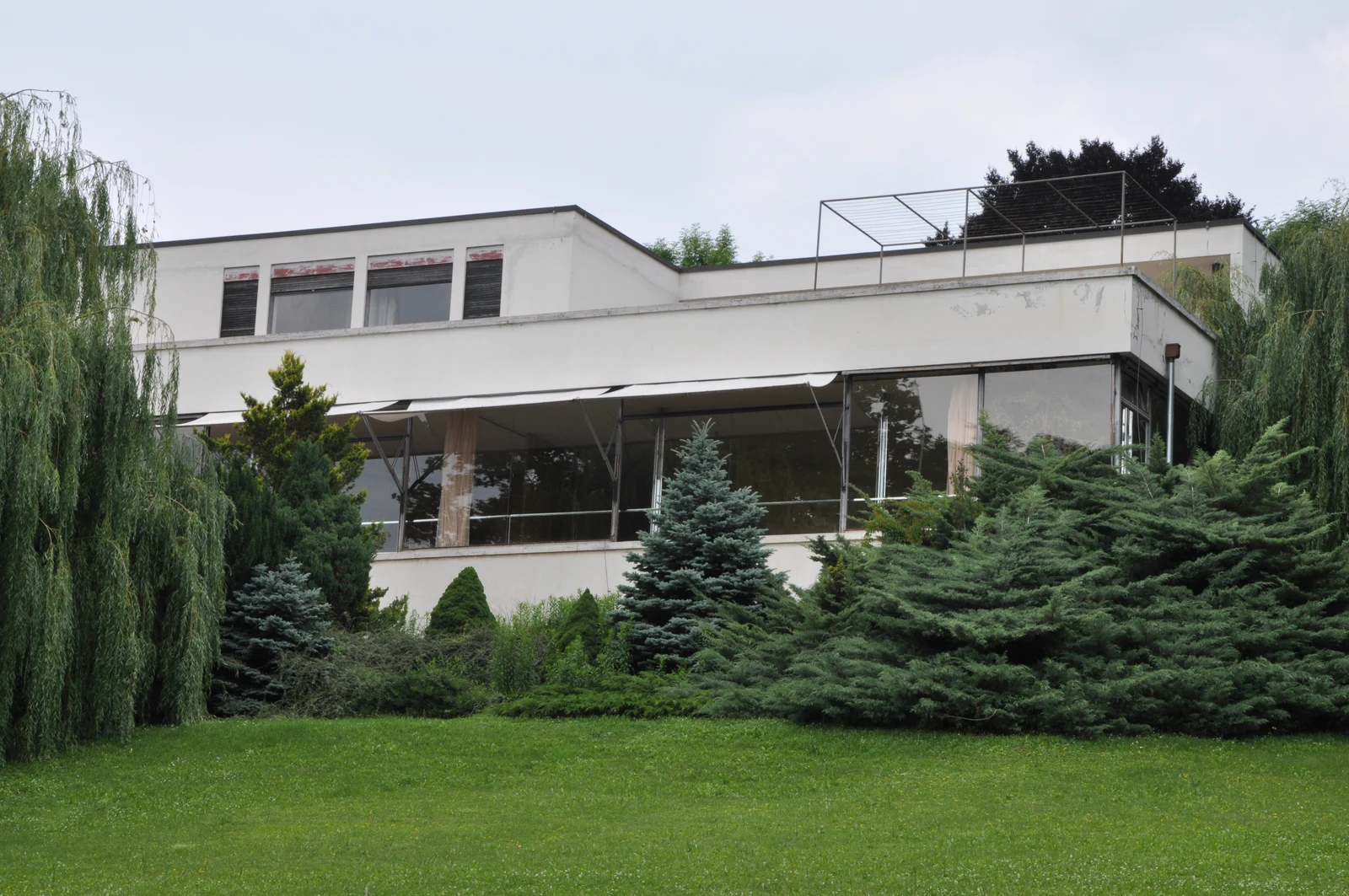
Mies van der Rohe's 1930 villa in Brno — a UNESCO World Heritage Site where the open plan and the dissolution of wall were first fully realized at residential scale.
Villa Tugendhat was commissioned by Fritz and Greta Tugendhat and completed in 1930. It is the only work by Mies van der Rohe in Central Europe, and one of the first buildings in Europe to put the principles of the Barcelona Pavilion — built a year earlier — into a lived domestic setting. Cruciform chrome-plated steel columns carry the roof, freeing every wall from structural duty and making the open plan a genuine spatial reality rather than a drawing-board proposition.
The approach is from the street at upper level, through bedrooms and service spaces. A staircase descends to the principal living floor, which opens entirely to the garden through floor-to-ceiling motorized glass walls that lower into the floor. When retracted, the room merges with the terrace and the panorama of Brno below. Three elements define the interior: an onyx wall, honey-coloured and translucent when backlit; a semicircular screen of Makassar ebony that separates the dining area; and the chrome columns — each placed with absolute precision, none touching the glass perimeter.
The Tugendhat family fled in 1938 following the Nazi annexation of Czechoslovakia. The house served successively as a cavalry stable, a children's rehabilitation clinic, and a Communist-era state property. A meticulous restoration completed in 2012 returned it to its 1930 condition. Visits are by guided tour only.
Stand at the onyx wall. Watch what happens when the garden windows descend. The relationship between this room and the city below — Brno spread out through glass, brought inside without being enclosed — is the reason Mies built it here, on this slope, facing this view.
Architecture · ModernismInterior · Residential Interior
Nearby places
More in Brno
Comments
Sign in to leave a comment.
Access conditions may change. Please check current opening and access information with the venue before visiting.
Something wrong or missing?