Worth Visiting
Vitra Design Museum
Frank Gehry · 1989
ArchitectFrank Gehry
Year1989
LocationWeil am Rhein, Germany
Coordinates47.6017° N, 7.6189° E
TypeArchitecture · Contemporary Architecture, Culture · Museum
StatusWorth Visiting
Sign in to save and check in to this place.
About this place
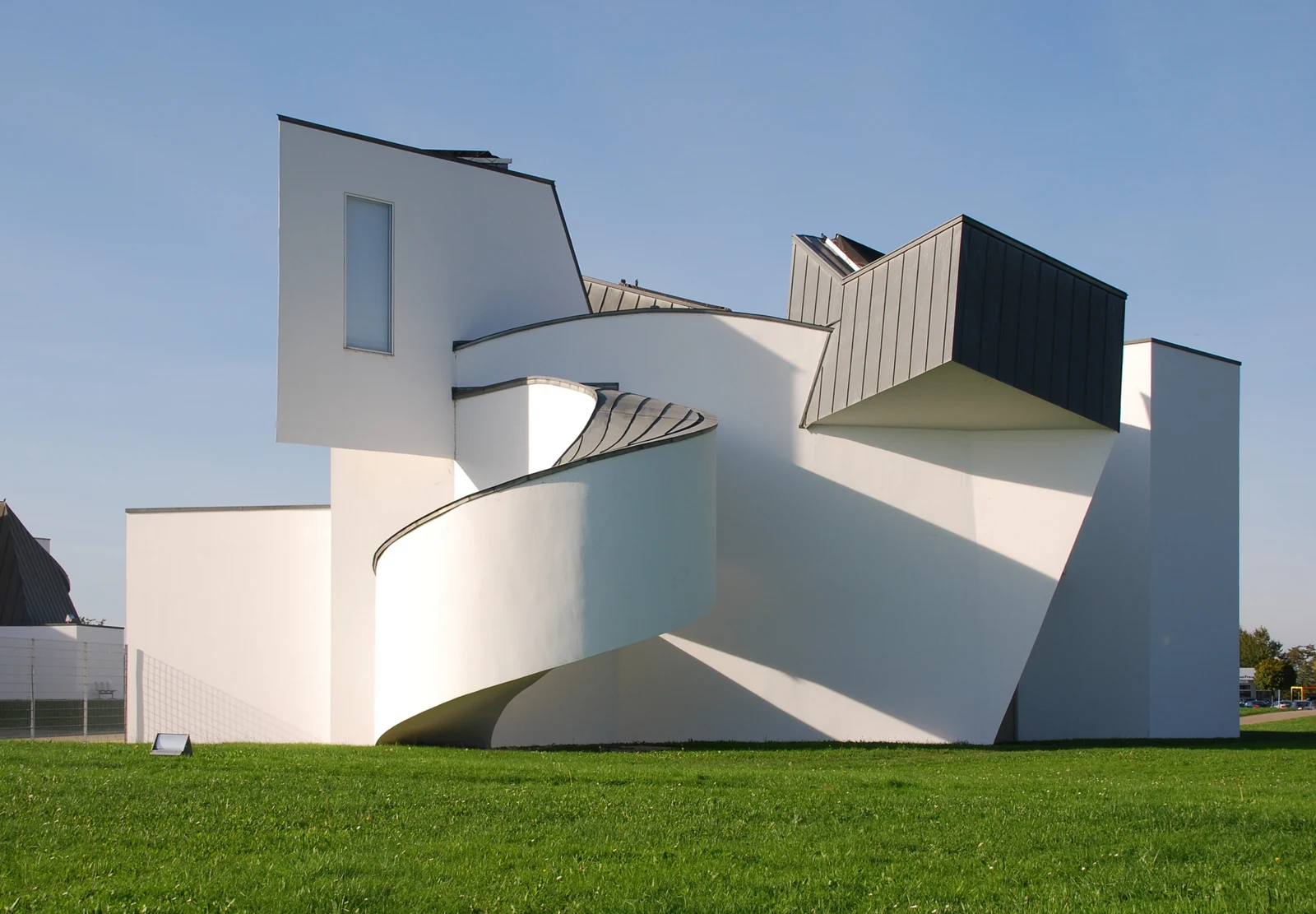
Frank Gehry's first building in Europe (1989), on the Vitra Campus in Weil am Rhein. A sculptural white landmark housing one of the world's finest design collections.
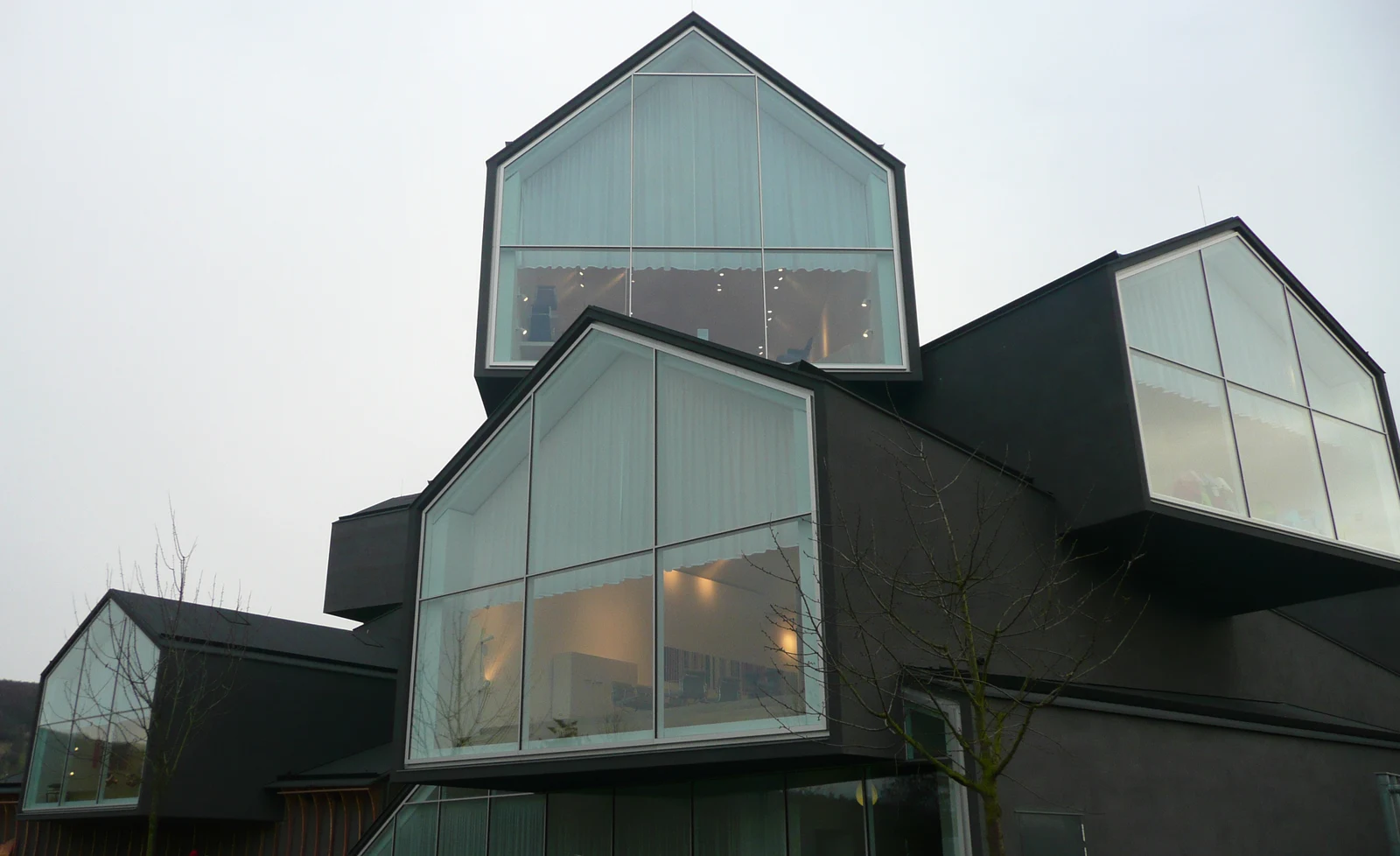
The Vitra Design Museum was the first building Frank Gehry completed in Europe, finished in 1989. It sits at the entrance of the Vitra Campus — a remarkable concentration of architecture by some of the most significant architects of the late twentieth century — alongside buildings by Zaha Hadid, Tadao Ando, Herzog & de Meuron, Álvaro Siza, and SANAA.
The museum building reads as a collision of geometric fragments: cubes, cylinders, ramps, and planes pushed against each other and frozen mid-movement. The white rendered surfaces catch light differently at every angle. From a distance it looks almost chaotic; up close the forms reveal a tightly controlled spatial logic — each fragment corresponds to a distinct interior space, and the complexity outside prepares you for the compressed, varied sequence of galleries within.
The collection focuses on furniture and product design from the Industrial Revolution to the present: over 20,000 objects by designers including Charles and Ray Eames, Verner Panton, Jean Prouvé, and Isamu Noguchi. The permanent collection is shown selectively alongside rotating thematic exhibitions.
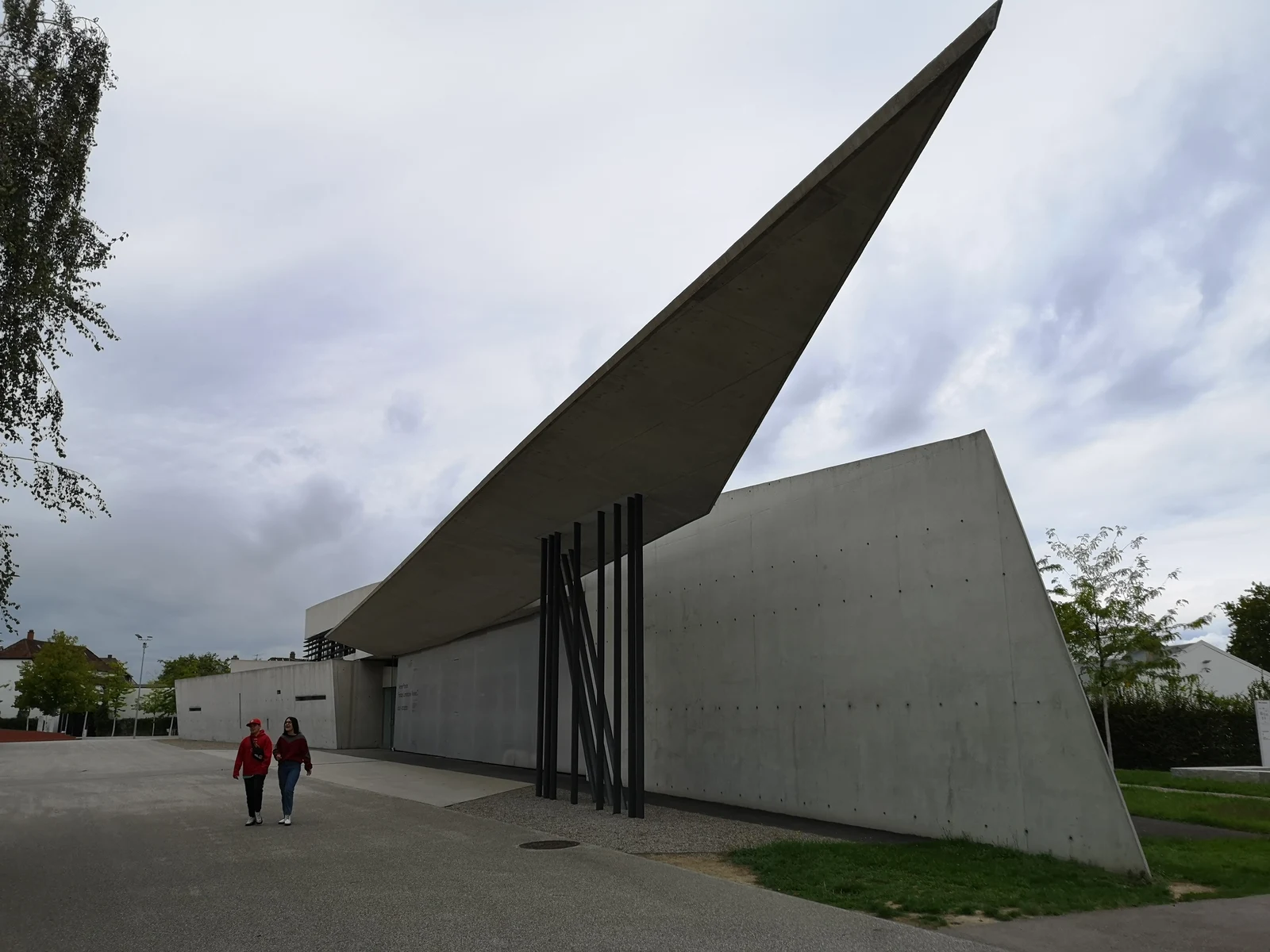
The campus visit is as much about the landscape between buildings as the buildings themselves. The Hadid Fire Station (1993) — her first built work — is a short walk. The Ando Conference Pavilion and the Prouvé petrol station reassembled on site add further register. Allow half a day for the campus; the museum alone takes an hour.
Architecture · Contemporary ArchitectureCulture · Museum
Nearby places
More in Weil am RheinAll →
No other places in Weil am Rhein yet.
Comments
Sign in to leave a comment.
Access conditions may change. Please check current opening and access information with the venue before visiting.
Something wrong or missing?