Visit if Near
V&V Lampadistis Winery
Eraclis Papachristou Architects · 2022
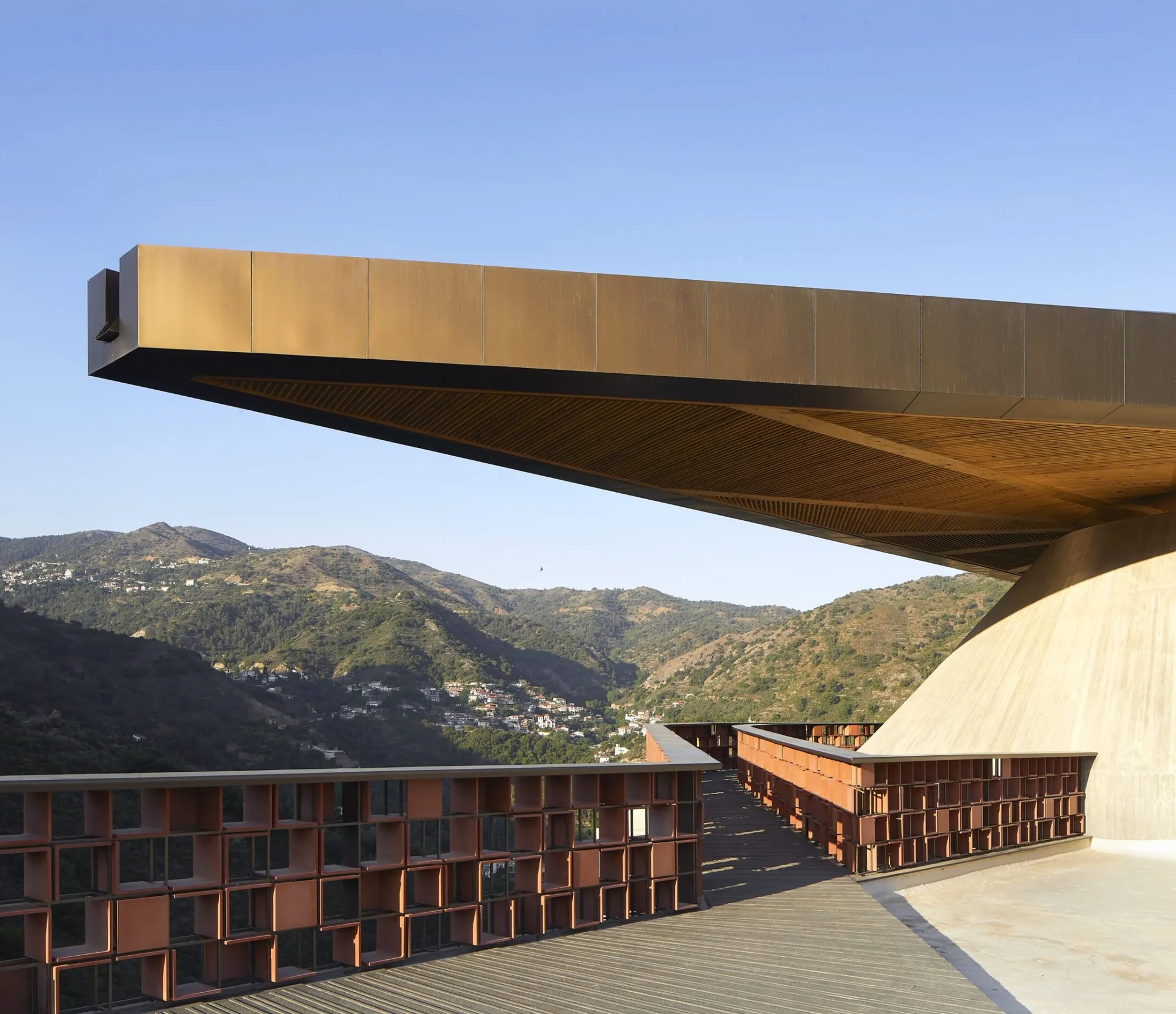
FIG. 01
ArchitectEraclis Papachristou Architects
Year2022
LocationKalopanayiotis, Cyprus
StatusVisit if Near
Sign in to save and check in to this place.
About this place
A winery of three massive béton brut cylinders in the Troodos mountains, referencing the Byzantine monastery nearby while contrasting raw concrete with reclaimed fire-salvaged timber.
V&V Lampadistis Winery occupies a mountain village in the Troodos foothills whose most prominent landmark is the medieval monastery of St. John the Baptist — a UNESCO-listed complex whose stone walls and cylindrical church forms have shaped the visual character of this narrow valley for centuries. Eraclis Papachristou Architects drew that formal precedent into an emphatically contemporary building: three massive cylinders house the different production stages of the winery, arranged along a linear path that descends from the mountainside into the building's core.
The cylinders emerge from a compact base clad in béton brut concrete, the coarse industrial surface set against the warmth of reclaimed timber salvaged from a forest fire. The use of fire-damaged wood is not incidental — it carries a specific ecological memory into the material palette, making visible the relationship between landscape, catastrophe, and cultural production in a region where both viniculture and forest fires are defining facts of life.
A traditional stonework-derived balustrade pattern guides visitors from the mountain road along the linear promenade into the heart of the building, where three glass cylinders reveal the winemaking process from above, machinery visible through the floor below an expansive timber ceiling that floats across the entire volume. The roof extends as a generous canopy beyond the building's footprint, creating a shaded threshold between the path and the production interior.
The architecture makes no attempt to disappear into its setting. Against the ancient stone of Kalopanayiotis, the building declares itself through mass, material, and geometry — and earns that declaration through the clarity of the spatial sequence it creates.


Comments
Sign in to leave a comment.
Something wrong or missing?