Visit if Near
Basilica di Sant'Ambrogio
Unknown (Romanesque rebuilding, 11th–12th century) · 1128
ArchitectUnknown (Romanesque rebuilding, 11th–12th century)
Year1128
LocationMilan, Italy
Coordinates45.4623° N, 9.1756° E
TypeArchitecture · Religious Building
StatusVisit if Near
Sign in to save and check in to this place.
About this place
Milan's oldest major church, founded by St. Ambrose in the 4th century and rebuilt in the 11th–12th century into one of the finest examples of Lombard Romanesque architecture.
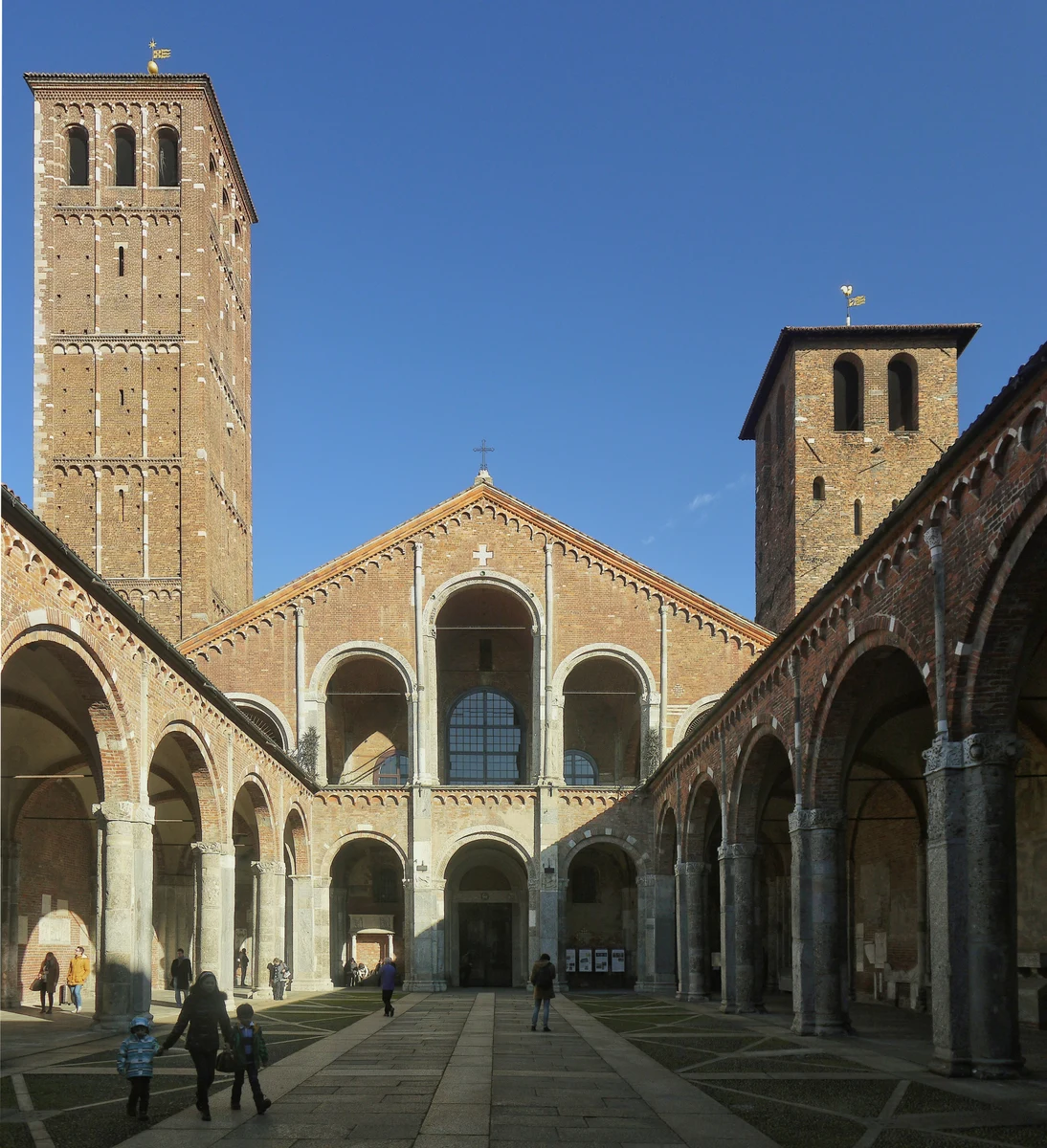
Founded between 379 and 386 by Bishop Ambrose (later Saint Ambrose, Milan's patron saint), the Basilica di Sant'Ambrogio is one of the oldest churches in the city and among the most complete surviving examples of Lombard Romanesque architecture in Italy. The current building largely dates from a major reconstruction begun around 1080, with the nave completed by roughly 1128 — the church visitors see today is essentially a 12th-century structure built over and around the much older foundation.
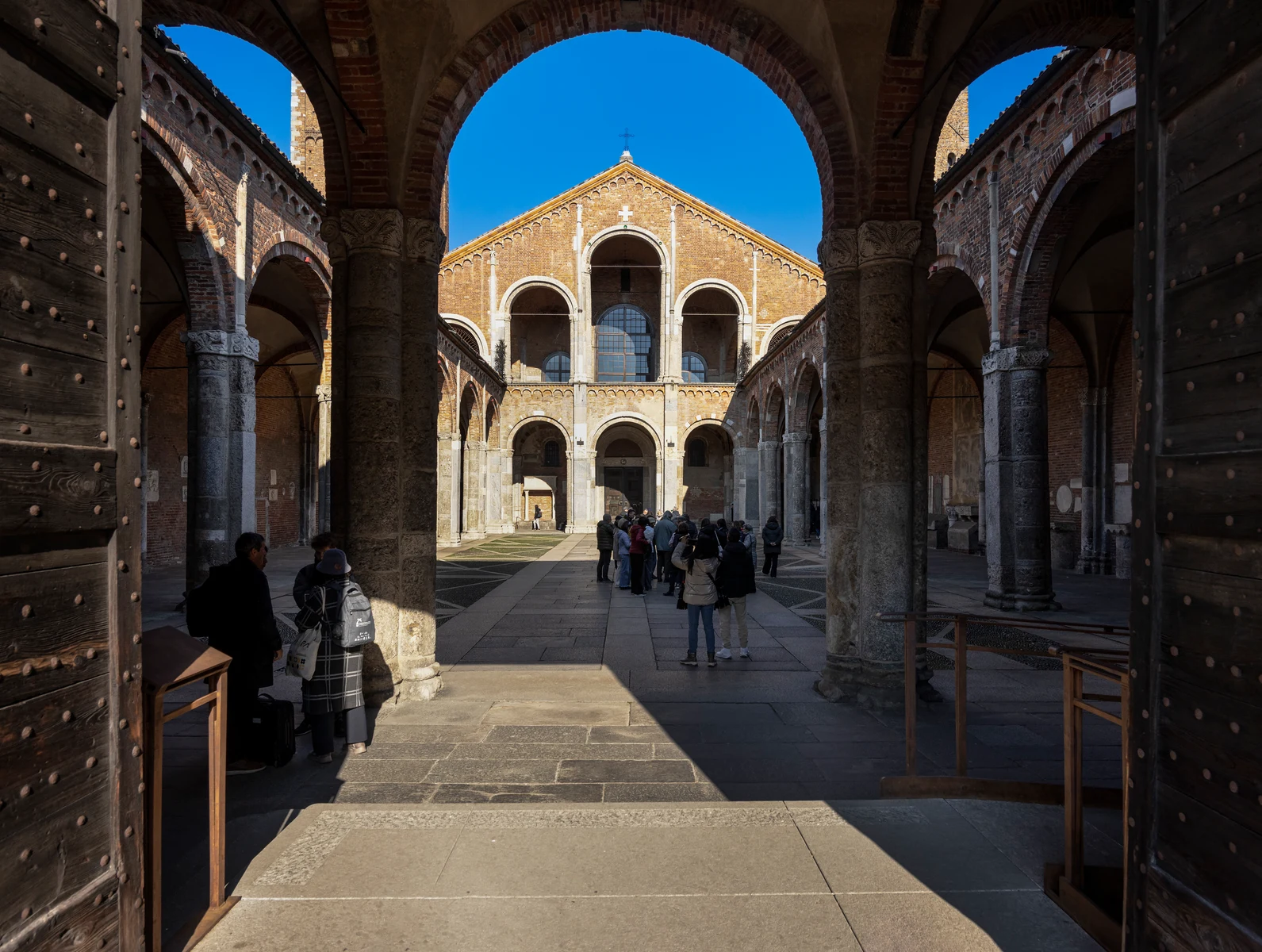
The basilica's atrium — a rare surviving quadriporticus, a colonnaded courtyard preceding the main facade — is one of its most distinctive features, giving visitors a processional approach unlike almost any other church in Milan. Inside, heavy Romanesque piers, a raised presbytery over a crypt holding the remains of Saints Ambrose, Gervasius, and Protasius, and a golden altar (the Paliotto d'Oro, a masterpiece of Carolingian goldsmithing from the 9th century) combine to give the interior a weight and gravity distinct from Milan's more famous Gothic Duomo.
Beyond its architectural significance, Sant'Ambrogio remains central to Milanese civic and religious identity — it was the site of imperial coronations in the medieval period and continues to host the city's major religious ceremonies. For visitors tracing the roots of Romanesque architecture in Lombardy, or simply seeking a quieter, older counterpoint to the Duomo's crowds, it's an essential stop within easy walking distance of central Milan.
Architecture · Religious Building
Nearby places
More in MilanAll →
Comments
Sign in to leave a comment.
Access conditions may change. Please check current opening and access information with the venue before visiting.
Something wrong or missing?