Visit if Near
Cabanon Le Corbusier
Le Corbusier · 1952
ArchitectLe Corbusier
Year1952
LocationRoquebrune-Cap-Martin, France
Coordinates43.7599° N, 7.4635° E
TypeArchitecture · Historic Architecture
StatusVisit if Near
Sign in to save and check in to this place.
About this place
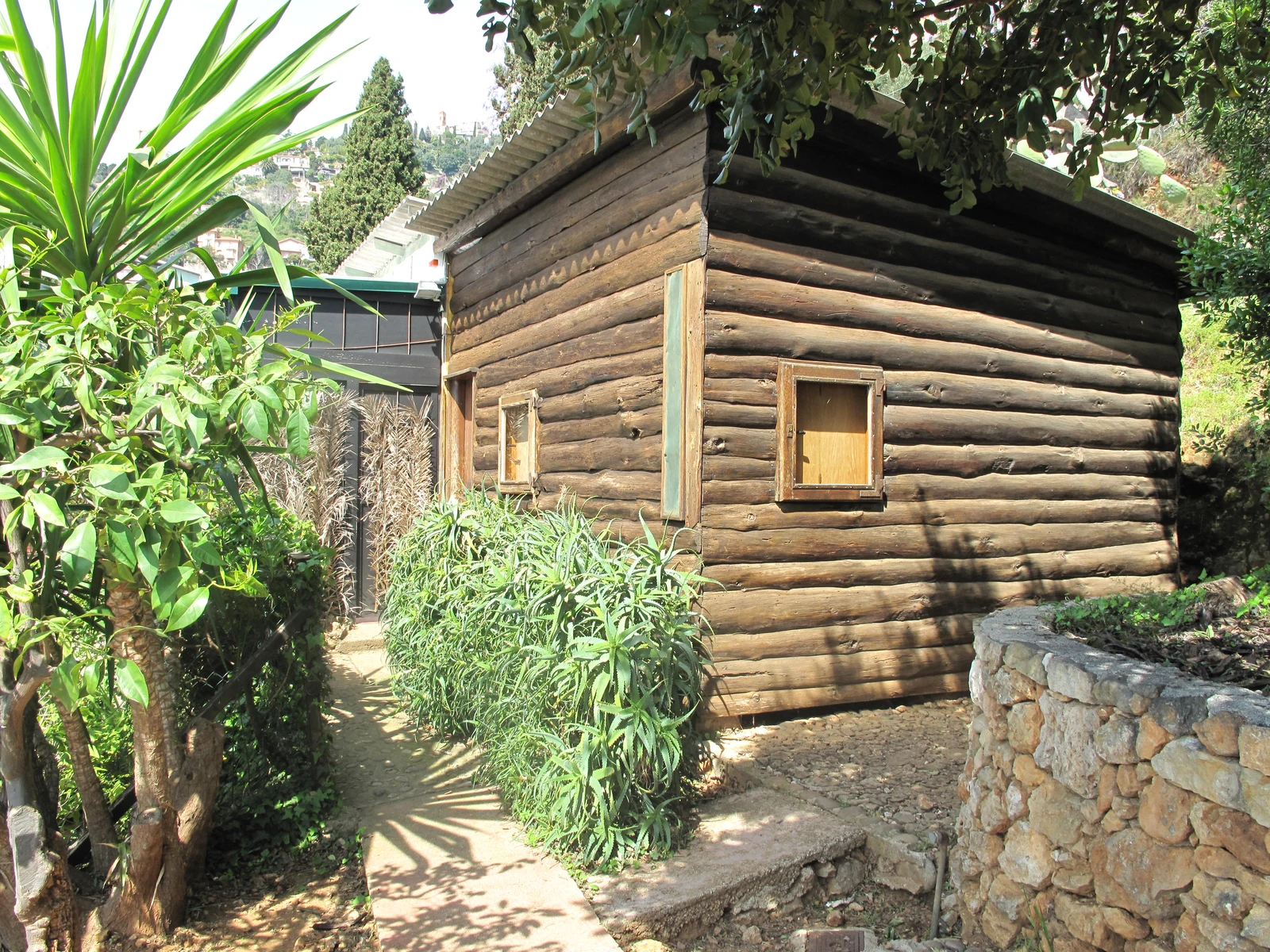
Le Corbusier's 15m² timber cabin on the French Riviera, built 1952 as his private retreat. A UNESCO World Heritage Site — the Modulor system compressed into a single room.
The Cabanon is Le Corbusier's most personal building: a timber cabin measuring just 3.66 by 3.66 metres, built in 1952 on a cliff above the Mediterranean at Roquebrune-Cap-Martin, next to the restaurant where he ate lunch every summer for the last decade of his life. He designed it in one evening, he claimed, as a birthday present for his wife Yvonne. He died here in 1965, swimming in the sea below.
The building is a precise demonstration of the Modulor — the proportional system Le Corbusier developed in the 1940s based on human body measurements. Every dimension of the cabin's interior derives from the Modulor sequence: the height of the ceiling, the width of the bed alcove, the depth of the desk, the position of the storage shelves. The result is a space of extraordinary spatial efficiency — everything necessary, nothing surplus — that has been cited ever since as evidence that the Modulor works as a design tool rather than an abstract diagram.
The exterior is simple pine log construction, the cabin set into the cliff face and largely invisible from the sea path below. The interior walls are covered in Corbusier's own drawings and paintings, giving the space an autobiographical density that no photograph quite captures.
The Cabanon forms part of the UNESCO World Heritage listing of Le Corbusier's architectural work, inscribed in 2016. Visits are possible by guided tour only, arranged through the Fondation Le Corbusier or local heritage bodies. Access involves a walk along the Promenade Le Corbusier, a coastal path that passes the cabin, the adjacent holiday units he designed for friends, and the workshop he used in his final years.
Architecture · Historic Architecture
Nearby places
More in Roquebrune-Cap-MartinAll →
Comments
Sign in to leave a comment.
Access conditions may change. Please check current opening and access information with the venue before visiting.
Something wrong or missing?