Visit if Near
E-1027
Eileen Gray · 1929
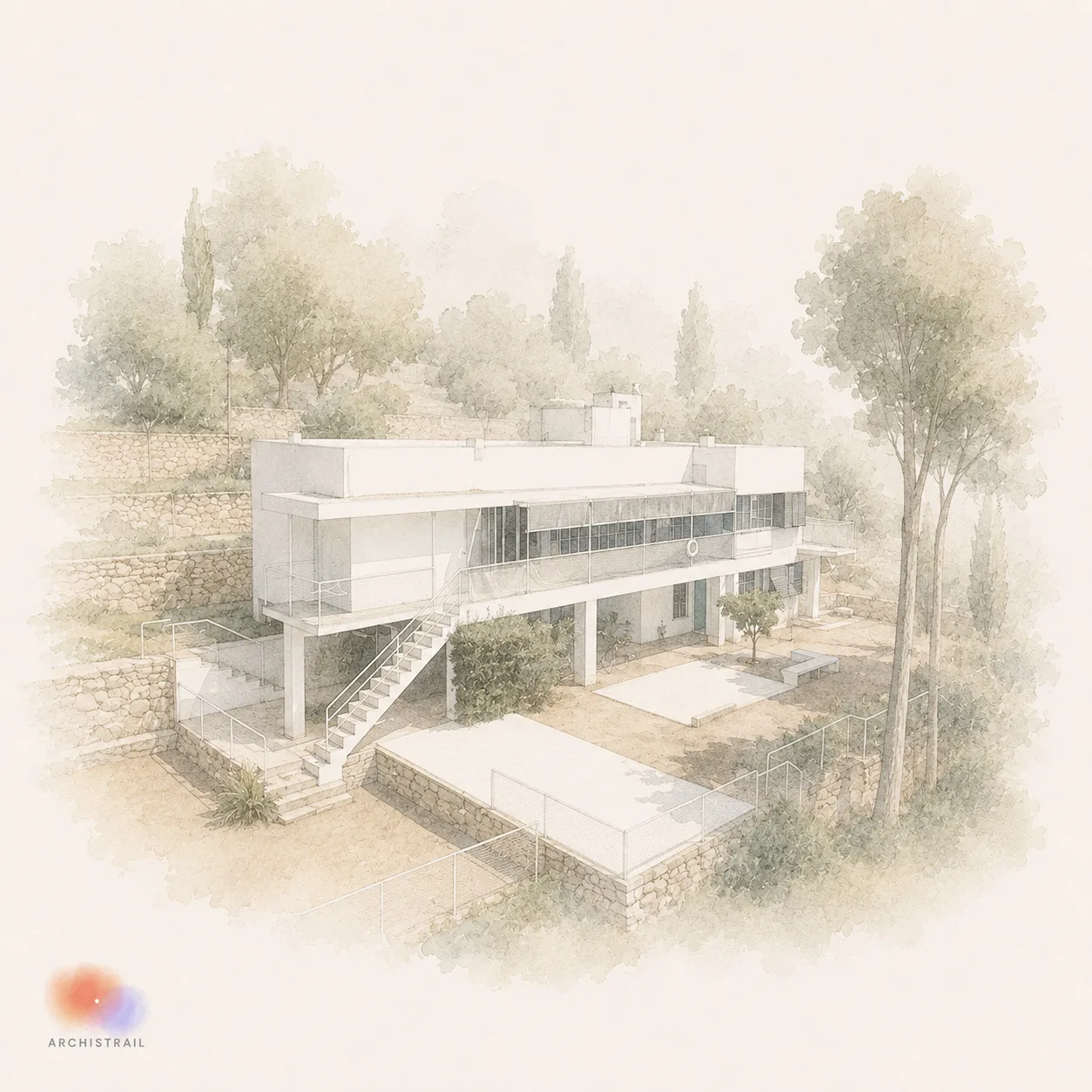
FIG. 01
ArchitectEileen Gray
Year1929
LocationRoquebrune-Cap-Martin, France
Coordinates43.7599° N, 7.4632° E
TypeArchitecture · Modernism, Interior · Residential Interior
StatusVisit if Near
Sign in to save and check in to this place.
About this place
Eileen Gray's 1929 modernist villa on the Côte d'Azur — a radical act of spatial invention and one of the first great works of female modernism.
E-1027 sits on a rocky ledge above the Mediterranean, accessed by a coastal path between Menton and Monaco. Designed by Eileen Gray between 1926 and 1929, the villa takes its cryptic name from a cipher of its two creators: E for Eileen, 10 for J (Jean Badovici), 2 for B, 7 for G — a private inscription of authorship that would later be obscured.
The house is a masterwork of early modernism: compact in plan yet generous in section, every room arranged to frame the sea. A nautical sensibility runs through the details — rope railings, built-in furniture, adjustable screens, and a retractable ladder to the roof terrace. Gray designed all the furnishings herself, including the E-1027 table, a side table on a tubular steel base that swings over a reclined figure, still in production today.
Le Corbusier stayed here several times as a guest and controversially painted murals over Gray's white walls — an act she never sanctioned and which she considered a violation. The murals remain, complicating the building's legacy while deepening its history.
Restored and reopened in 2021 under the Cap Moderne ensemble, E-1027 can now be visited on a guided tour. It stands as proof that Gray's spatial intelligence was at least equal to her better-known contemporaries — and that the authorship of modernism was broader, and stranger, than the canon suggests.
Architecture · ModernismInterior · Residential Interior
Nearby places
More in Roquebrune-Cap-MartinAll →
Comments
Sign in to leave a comment.
Access conditions may change. Please check current opening and access information with the venue before visiting.
Something wrong or missing?