Worth Visiting
Itami Jun Museum
ITM Yooehwa Architects (Yoo E-hwa) · 2022
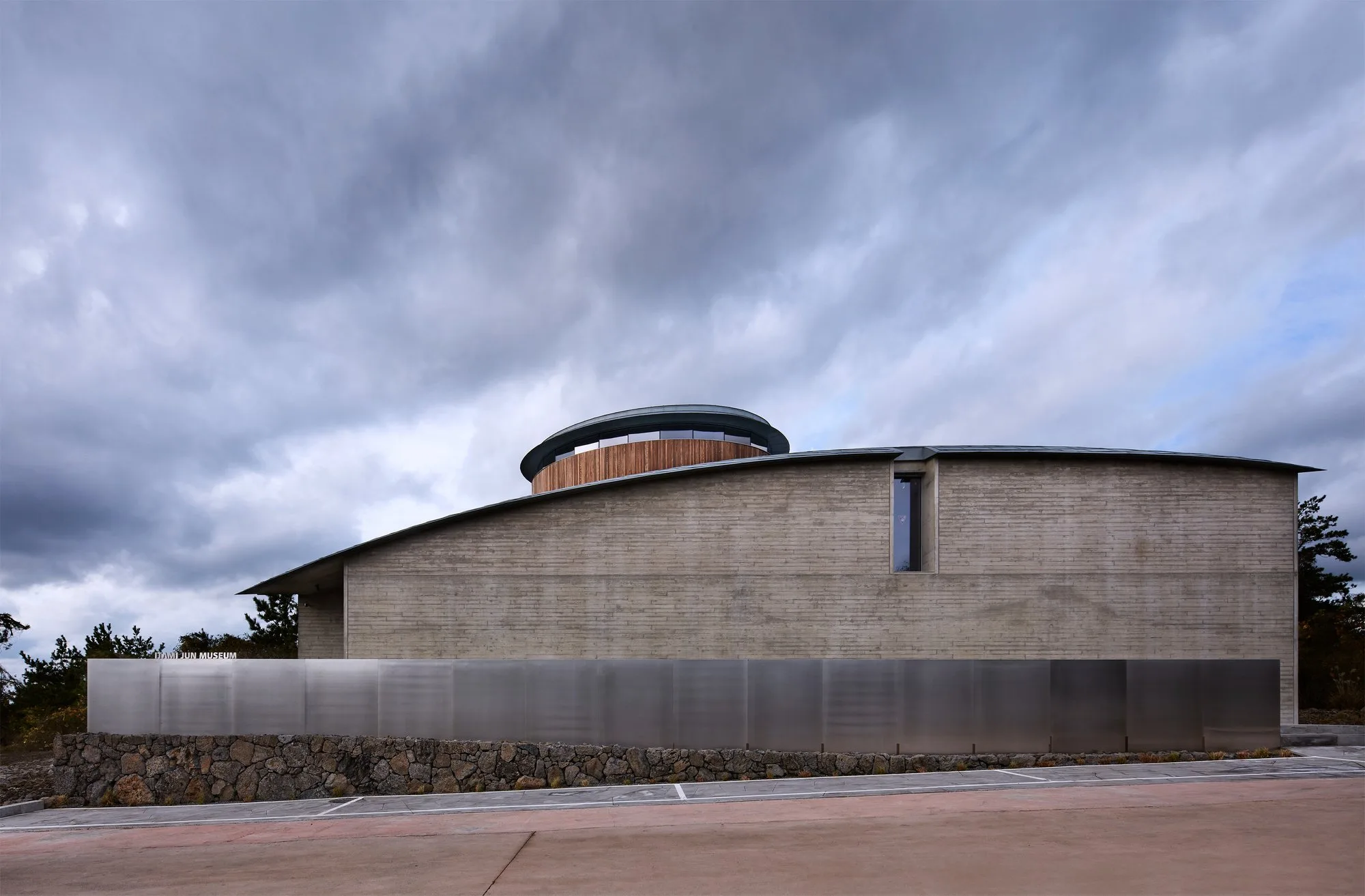
FIG. 01
Photo: Yongkwan Kim
ArchitectITM Yooehwa Architects (Yoo E-hwa)
Year2022
LocationJeju City, South Korea
Coordinates33.3407° N, 126.2706° E
TypeCulture · Museum, Architecture · Museum Building
StatusWorth Visiting
Sign in to save and check in to this place.
About this place
Museum dedicated to Korean-Japanese architect Itami Jun, housed in a 674 m² concrete building set within the Gokjawal forest on Jeju's western edge.
Itami Jun Museum sits within Jeju’s Gokjawal forest — the rare lowland forest of basalt and lava that defines the island’s quiet interior. The museum was completed in 2022 by Yoo Ehwa (ITM Yooehwa Architects), the architect daughter of Jun Itami (Yutaka Maeda, 1937–2011), who spent decades building his most celebrated works on Jeju: the Water Museum, Stone Museum, Wind Museum, and Bangdu Church.
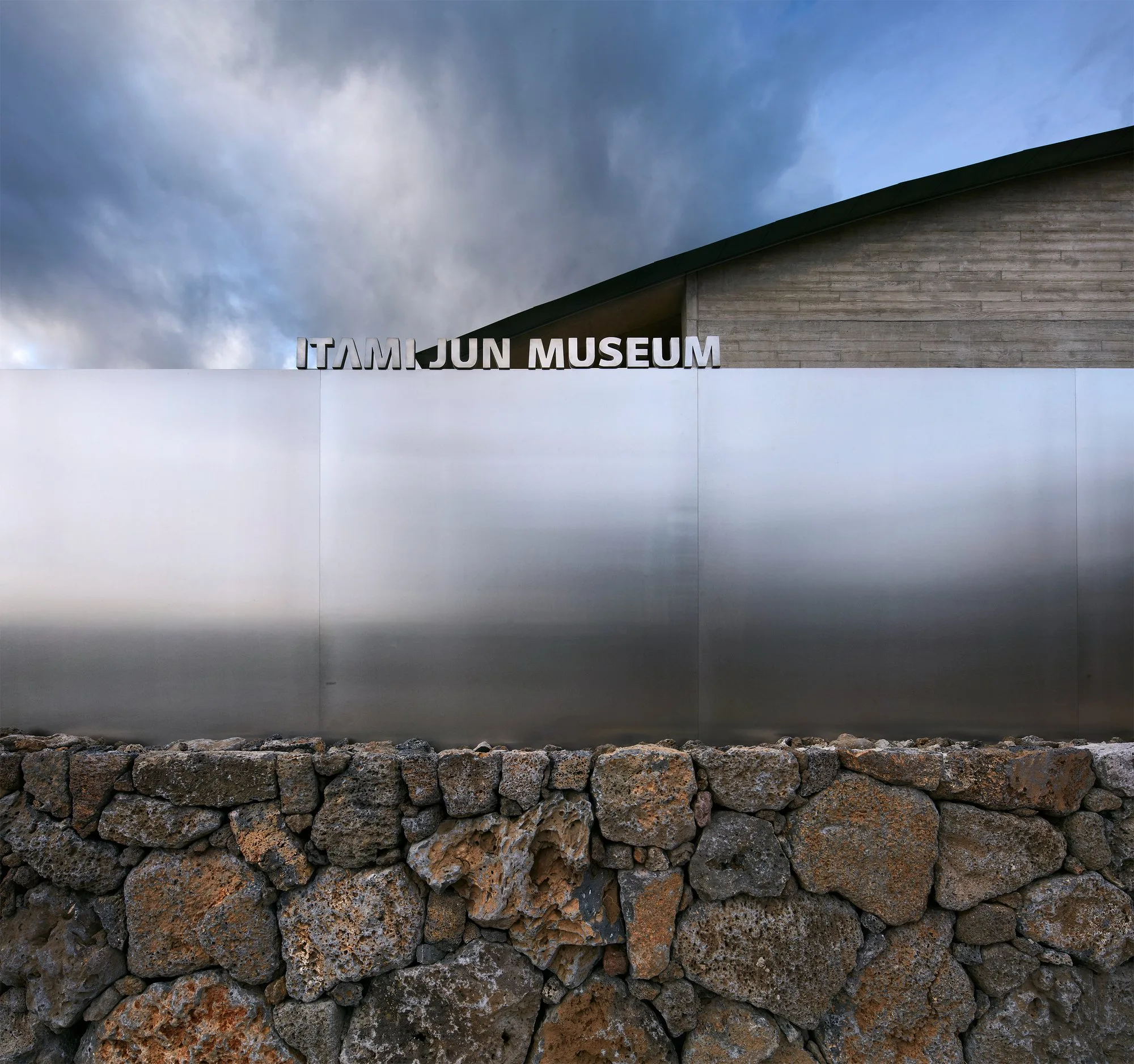
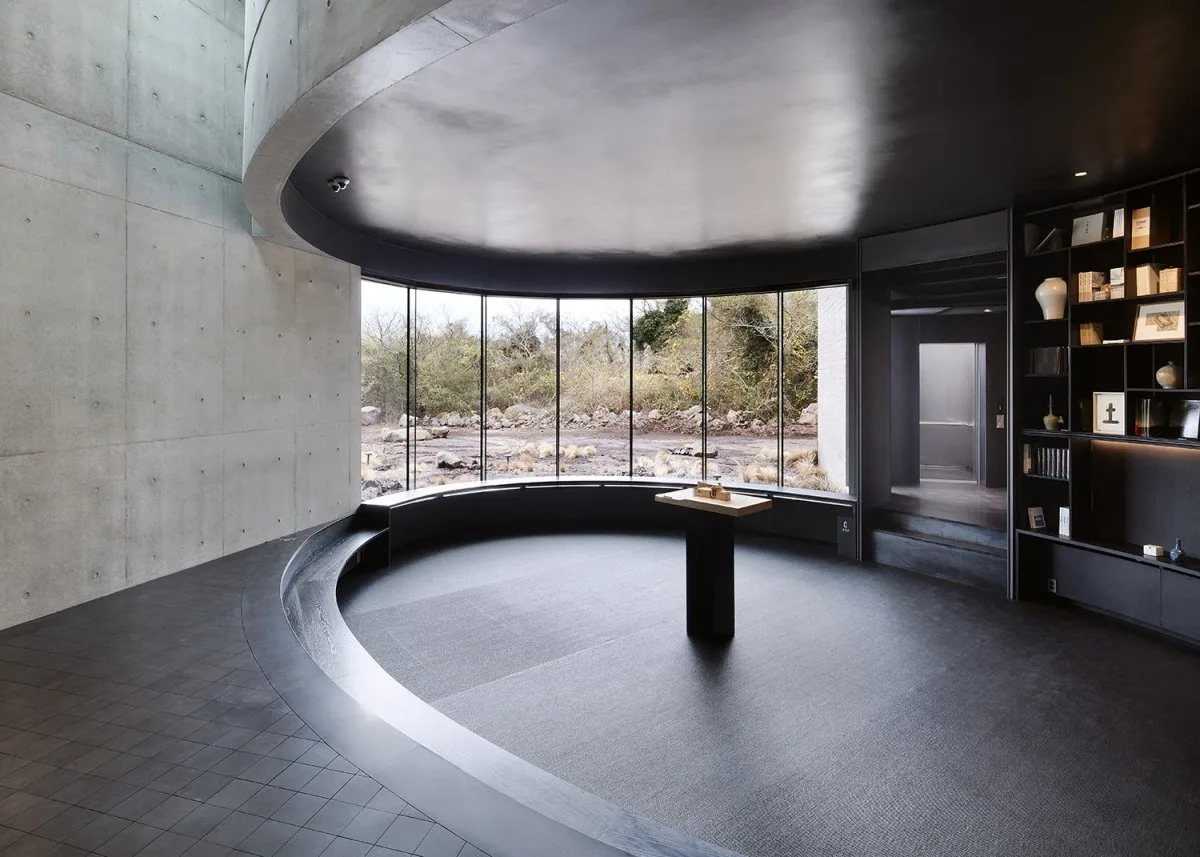
The 674 m² building is a considered act of inheritance rather than imitation. Warm fair-faced concrete walls carry the wood-grain imprint of their formwork; stainless steel elements catch the forest light in deliberate contrast with traditional Jeju basalt stone walls. The plan orbits an elliptical central mass that funnels natural light deep into the interior, reducing reliance on artificial sources and keeping the atmosphere restrained and contemplative.
The ground floor houses an ink-toned library designed for immersion in Itami’s writings, drawings, and built archive. The second-floor exhibition gallery takes the silhouette of Jeju island itself as its organizing form — an unusually intimate gesture in a building so quiet. Photography is restricted on the upper level; visitors are expected to look.
Admission includes tea service at the first-floor bar, which extends the visit into something slower and more considered than a standard gallery tour. The surrounding Gokjawal provides a constantly shifting frame — wind, filtered light, and the sounds of the forest — that mirrors what Itami Jun sought in his architecture: a built work that listens to its land before it speaks.
Plan for one to two hours. Located in Hallim-eup, on the western edge of Jeju.
Culture · MuseumArchitecture · Museum Building
More in Jeju CityAll →
Comments
Sign in to leave a comment.
Access conditions may change. Please check current opening and access information with the venue before visiting.
Something wrong or missing?