Must Visit
Paimio Sanatorium
Alvar Aalto · 1933
ArchitectAlvar Aalto
Year1933
LocationPaimio, Finland
Coordinates60.4649° N, 22.7351° E
TypeArchitecture · Sanatorium / Thermal Bath / Spa
StatusMust Visit
Sign in to save and check in to this place.
About this place
Alvar Aalto's 1933 tuberculosis sanatorium in the pine forests near Paimio — a landmark of Modernism and total design, from its solar-oriented plan to the famous Paimio Chair.
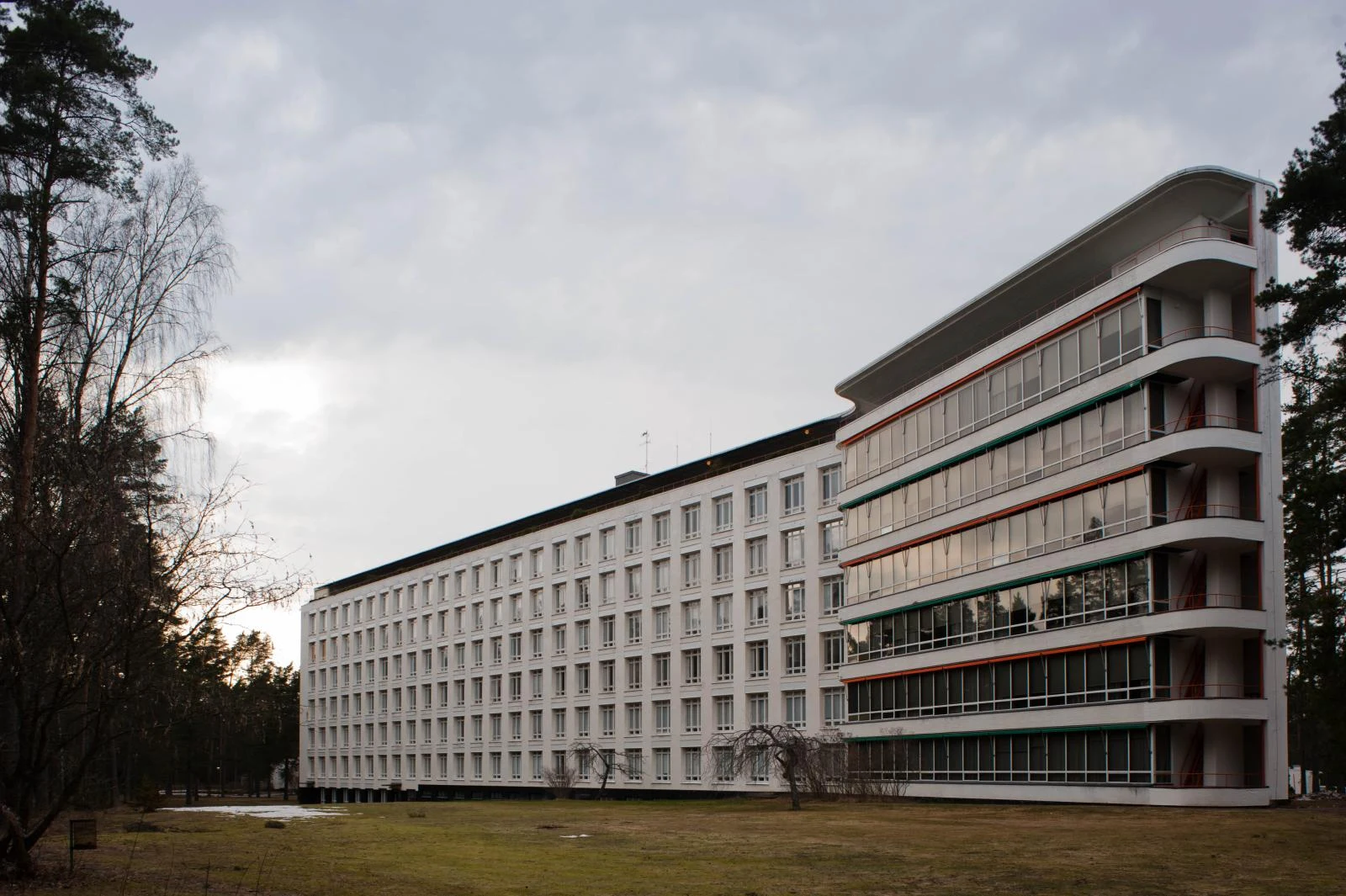
The Paimio Sanatorium, designed by Alvar and Aino Aalto and completed in 1933, is among the defining buildings of 20th-century Modernism — a complete work in which the form of every element, from the building's orientation on the site to the angle of the washbasins in the patient rooms, was determined by the requirements of recovery from tuberculosis.
The building's siting and organisation respond directly to the pre-antibiotic understanding of tuberculosis treatment. The patient wing is oriented to maximise southern light; the deep horizontal bands of windows give every bed a view of the pine forest and flooding sunlight. The staircase volume and service block are pulled to the north, keeping the main ward wing clear of shadow. The roof terraces allowed patients to take the air treatments then considered therapeutic, and their curving ends give the building its characteristic silhouette.
Internally, the Aaltos designed everything: the hanging ceiling in the reading room, the colour of the walls (a warm yellow-green calculated to be calming under low winter light), the door handles, the radiators recessed so patients in bed would not hear them, and the Paimio Chair — designed so that a seated person's upper body is at the precise angle that facilitates breathing for compromised lungs. This level of total design, driven by the specific needs of a TB patient, prefigures the humanist thread that would run through all of Aalto's subsequent work.
The building is now protected as a heritage monument. After decades as a hospital, it closed for acute care in 2015 and has been undergoing restoration. Guided visits and architecture tours are available through the Paimio Sanatorium Foundation.
Architecture · Sanatorium / Thermal Bath / Spa
Nearby places
More in PaimioAll →
No other places in Paimio yet.
Comments
Sign in to leave a comment.
Access conditions may change. Please check current opening and access information with the venue before visiting.
Something wrong or missing?