Visit if Near
The Wohl Centre
Daniel Libeskind · 2005
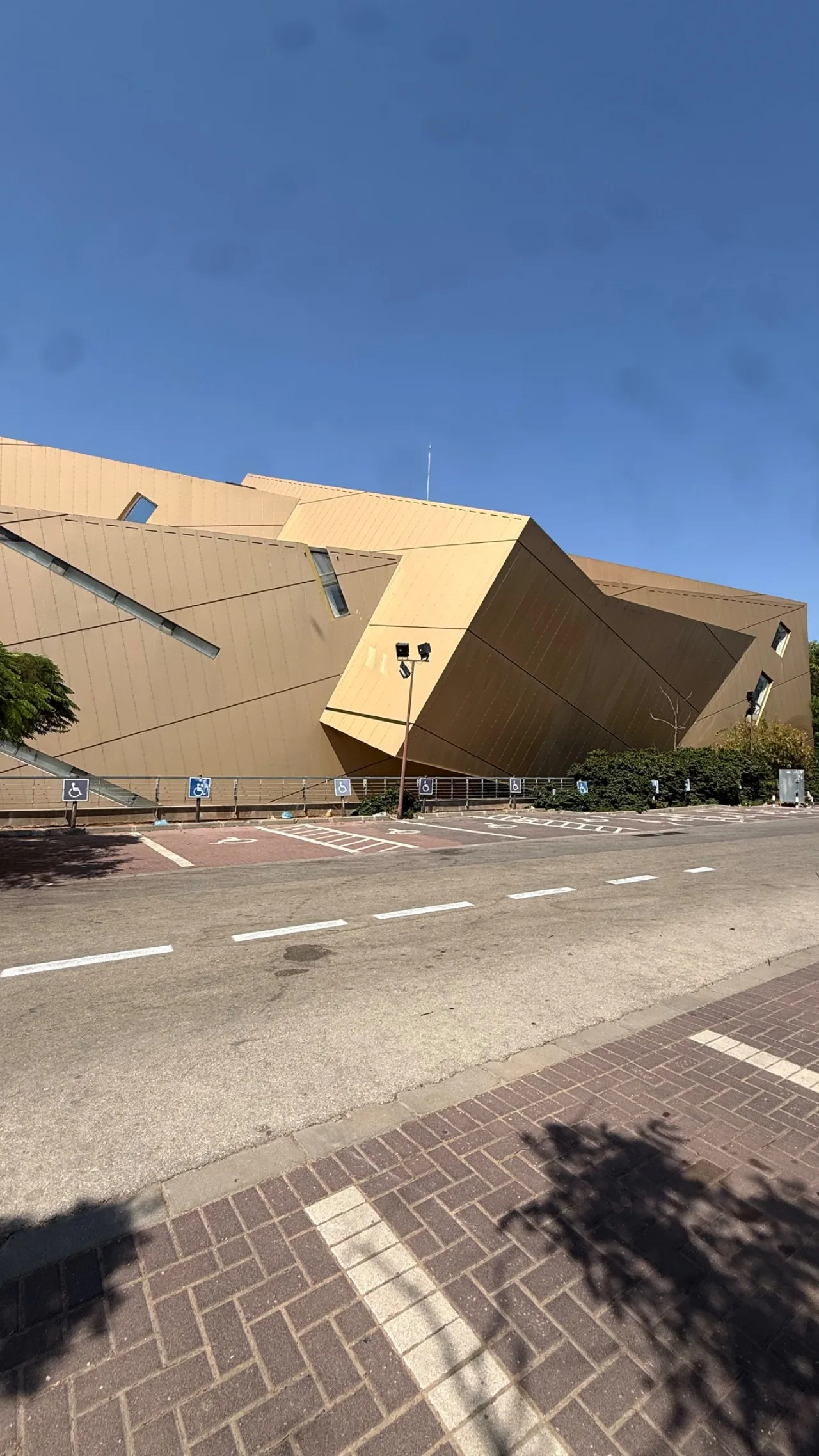
FIG. 01
ArchitectDaniel Libeskind
Year2005
LocationRamat Gan, Israel
Coordinates32.0714° N, 34.8467° E
TypeCulture · Performance Space, Architecture · Contemporary Architecture
StatusVisit if Near
Sign in to save and check in to this place.
About this place
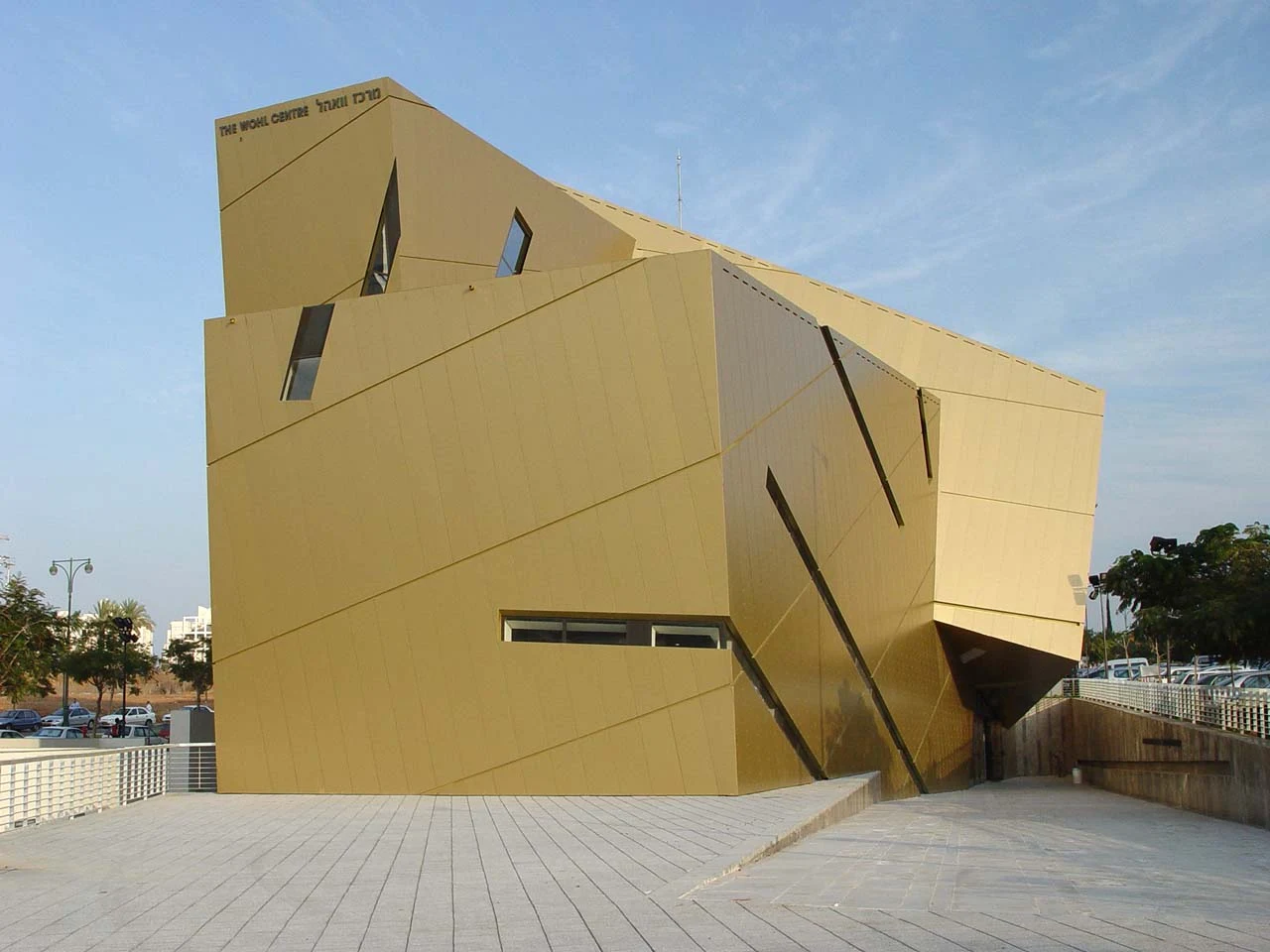
Daniel Libeskind's gold-clad deconstructivist auditorium at Bar-Ilan University — its open-book form evokes the interplay between knowledge and faith. RIBA International Award 2006.
The Wohl Centre is Daniel Libeskind's first completed building in Israel — a 3,900-square-metre convention and performance hall on the main campus of Bar-Ilan University in Ramat Gan. Constructed between 2001 and 2005, it was awarded the RIBA International Award in 2006.
The building's concept, titled "Voices and Its Echoes," gives spatial form to Bar-Ilan's foundational tension between secular and sacred knowledge. Libeskind interpreted this through the figure of an open book: the structure reads as a spine held open, two angular volumes cantilevering outward from a shared base. The exterior is clad in gold-colored aluminum panels, cut by deep diagonal slashes — incisions that also serve as windows — giving the massing a kinetic quality that shifts dramatically depending on viewpoint.
Inside, the building centers on a 1,000-seat auditorium acoustically calibrated for both musical performance and lectures. The relationship between the angular exterior shell and the contained volume within creates the spatial compression and release characteristic of Libeskind's approach: the exterior promises drama; the interior delivers a finely controlled acoustic environment.
The building was named after British-Jewish philanthropist Maurice Wohl, whose support made the project possible. Its B-class conservation designation (2019) confirms its standing as an architecturally significant work within Israeli heritage frameworks.
The Wohl Centre represents one of Libeskind's most resolved smaller institutional commissions — where the conceptual program (the open book as metaphor for the university's dual mission) is legibly embedded in built form rather than merely declared in the architect's statement.
Culture · Performance SpaceArchitecture · Contemporary Architecture
Comments
Sign in to leave a comment.
Access conditions may change. Please check current opening and access information with the venue before visiting.
Something wrong or missing?