Visit if Near
AEG Turbine Factory
Peter Behrens · 1910
ArchitectPeter Behrens
Year1910
LocationBerlin, Germany
Coordinates52.5281° N, 13.3245° E
TypeArchitecture · Historic Architecture
StatusVisit if Near
Sign in to save and check in to this place.
About this place
Landmark of early modernism designed by Peter Behrens for AEG in 1910. The monumental steel-and-glass hall in Berlin-Moabit fuses industrial function with classical proportion, pioneering the role of the architect as total designer. Still in active use and listed as a protected monument.
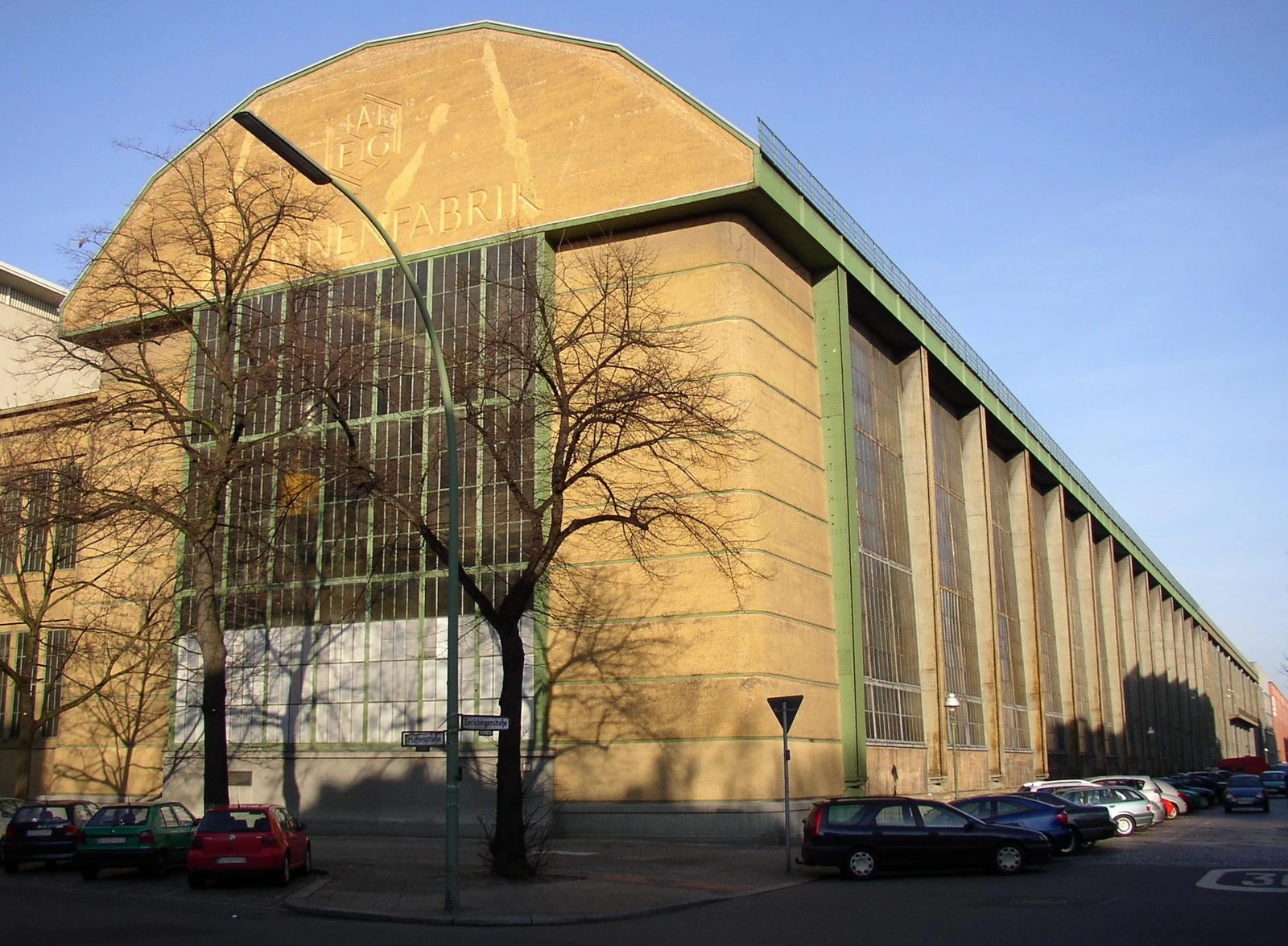
Peter Behrens's Turbine Hall, completed in 1909 for AEG in Berlin's Moabit district, is one of the defining buildings of early industrial modernism — and one of the first works to elevate a factory to the status of architecture.
The building's principal elevation on Huttenstraße presents a massive exposed steel portal frame, its diagonal corner piers rising without ornament, the glass curtain between them filling the façade from near-ground to near-roof. Behrens stripped the building of historicist decoration but retained monumental presence: the proportions are classical, the intention unmistakably civic.
As head of design at AEG from 1907, Behrens was responsible not just for architecture but for the company's entire visual identity — products, graphics, typefaces. The Turbine Hall was the physical expression of a total design philosophy: the idea that industry could carry aesthetic ambition. Three of the most influential architects of the 20th century — Le Corbusier, Ludwig Mies van der Rohe, and Walter Gropius — worked in Behrens's office during the years the building was designed, absorbing its lessons firsthand.
The hall is still in use as an industrial workshop. It is listed as a protected monument and recognised internationally as a landmark of industrial heritage and the roots of proto-modernist thought.
Architecture · Historic Architecture
Nearby places
More in BerlinAll →
Comments
Sign in to leave a comment.
Access conditions may change. Please check current opening and access information with the venue before visiting.
Something wrong or missing?