Must Visit
Bonte Museum
Tadao Ando · 2012
ArchitectTadao Ando
Year2012
LocationSeogwipo, South Korea
Coordinates33.3038° N, 126.3924° E
TypeCulture · Museum, Architecture · Museum Building
StatusMust Visit
Sign in to save and check in to this place.
About this place
Tadao Ando's concrete museum complex on Jeju Island, placing traditional Korean crafts and Kusama alongside béton brut galleries in a landscape of shadow and light.
Built into the hillside landscape of Andeok Valley in southern Jeju, Bonte Museum is one of Tadao Ando's most contemplative works outside Japan. Completed in 2012, the complex takes its name from the Korean word for "original form" — a concept that shapes both its mission and its architecture.
Ando's signature language — exposed béton brut, geometric voids, and corridors that channel light like instruments — is here put in dialogue with the island's volcanic stone and subtropical sky. Five interconnected galleries are set into the earth and arranged around courtyards that draw the outside in: wind, shadow, and the slow arc of sunlight across flat concrete planes become materials in themselves.
The collection began with the founder's forty-year accumulation of traditional Korean crafts — lacquerware, embroidery, wooden furniture, mother-of-pearl inlay — and has expanded to include international contemporary work. One gallery is permanently dedicated to Yayoi Kusama: her yellow Pumpkin sits in the landscape, and an Infinity Mirrored Room occupies a darkened interior hall.
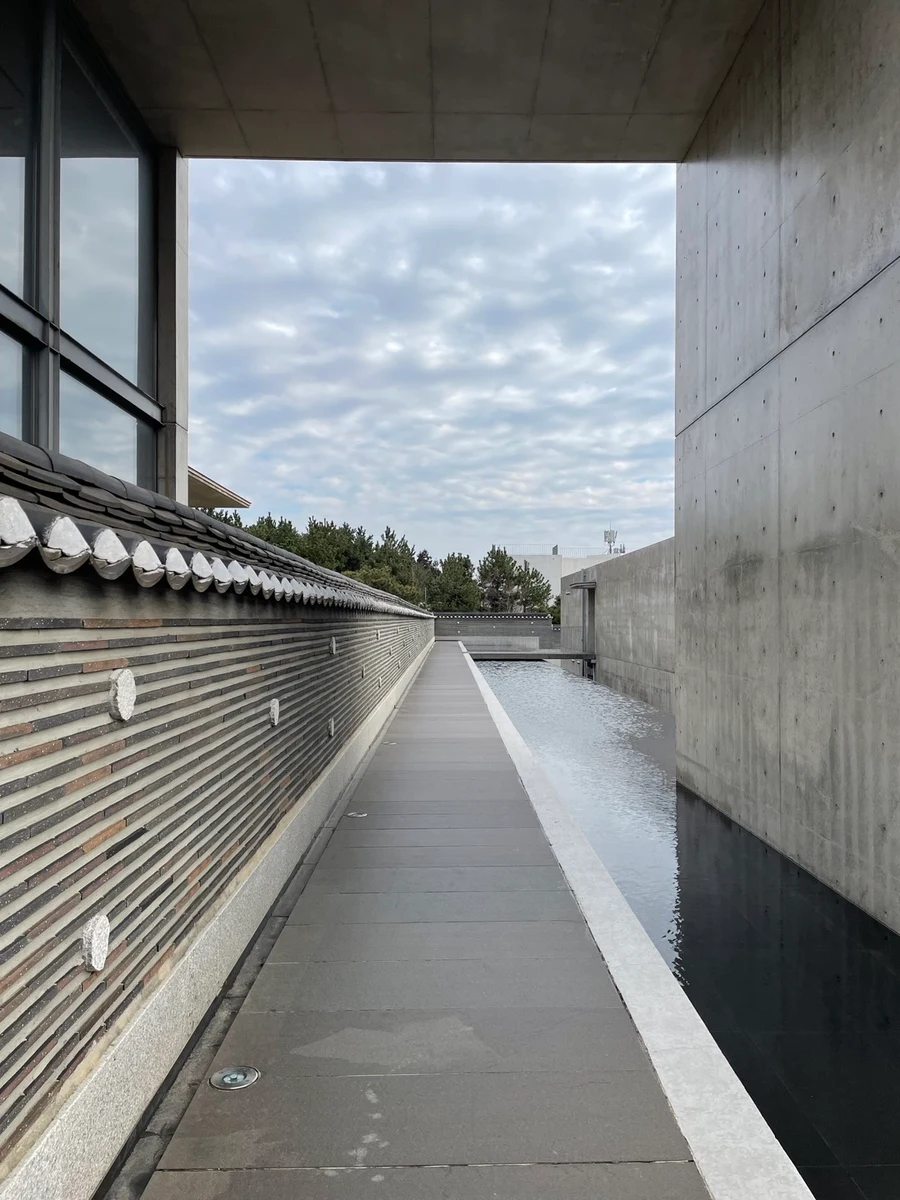
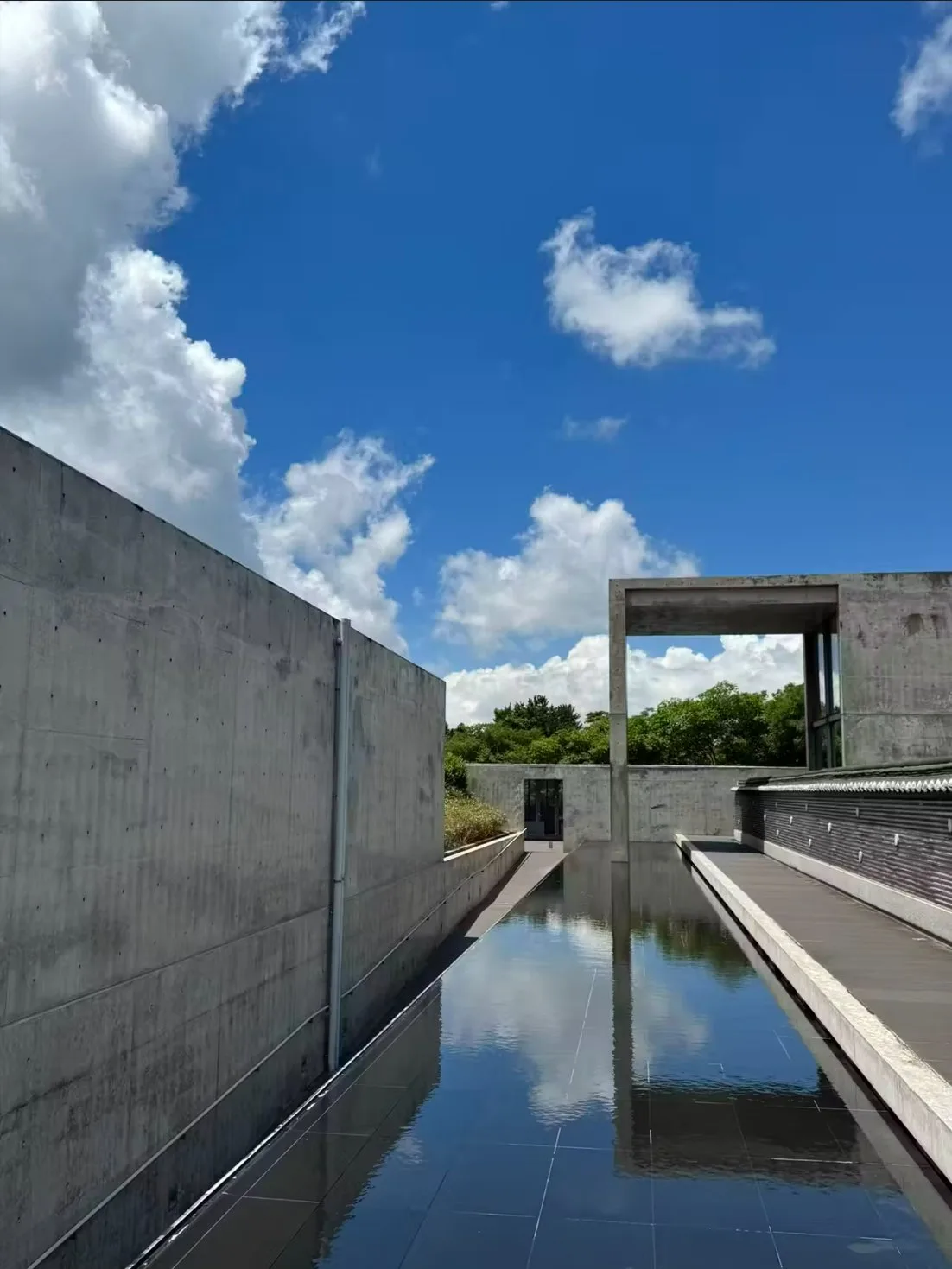
What distinguishes Bonte from other museum destinations is the quality of transition — the way Ando orchestrates movement from one space to the next, compressing and releasing, turning corners that reveal framed views of sky or bamboo. A reflecting pool runs alongside the main walkway, flanked on one side by a traditional Korean tile-capped wall, on the other by raw concrete: the dialogue between old and new made physical.
For architecture visitors, the walk between buildings is as important as the interiors. Arrive early to have the courtyards to yourself.
Culture · MuseumArchitecture · Museum Building
More in SeogwipoAll →
Comments
Sign in to leave a comment.
Access conditions may change. Please check current opening and access information with the venue before visiting.
Something wrong or missing?