Must Visit
Centre Pompidou
Renzo Piano & Richard Rogers · 1977
ArchitectRenzo Piano & Richard Rogers
Year1977
LocationParis, France
Coordinates48.8602° N, 2.3518° E
TypeCulture · Museum, Architecture · Landmark
StatusMust Visit
Sign in to save and check in to this place.
About this place
Piano and Rogers' 1977 inside-out cultural machine in the Marais — its colour-coded exposed structure turned architecture inside out and has never stopped provoking.
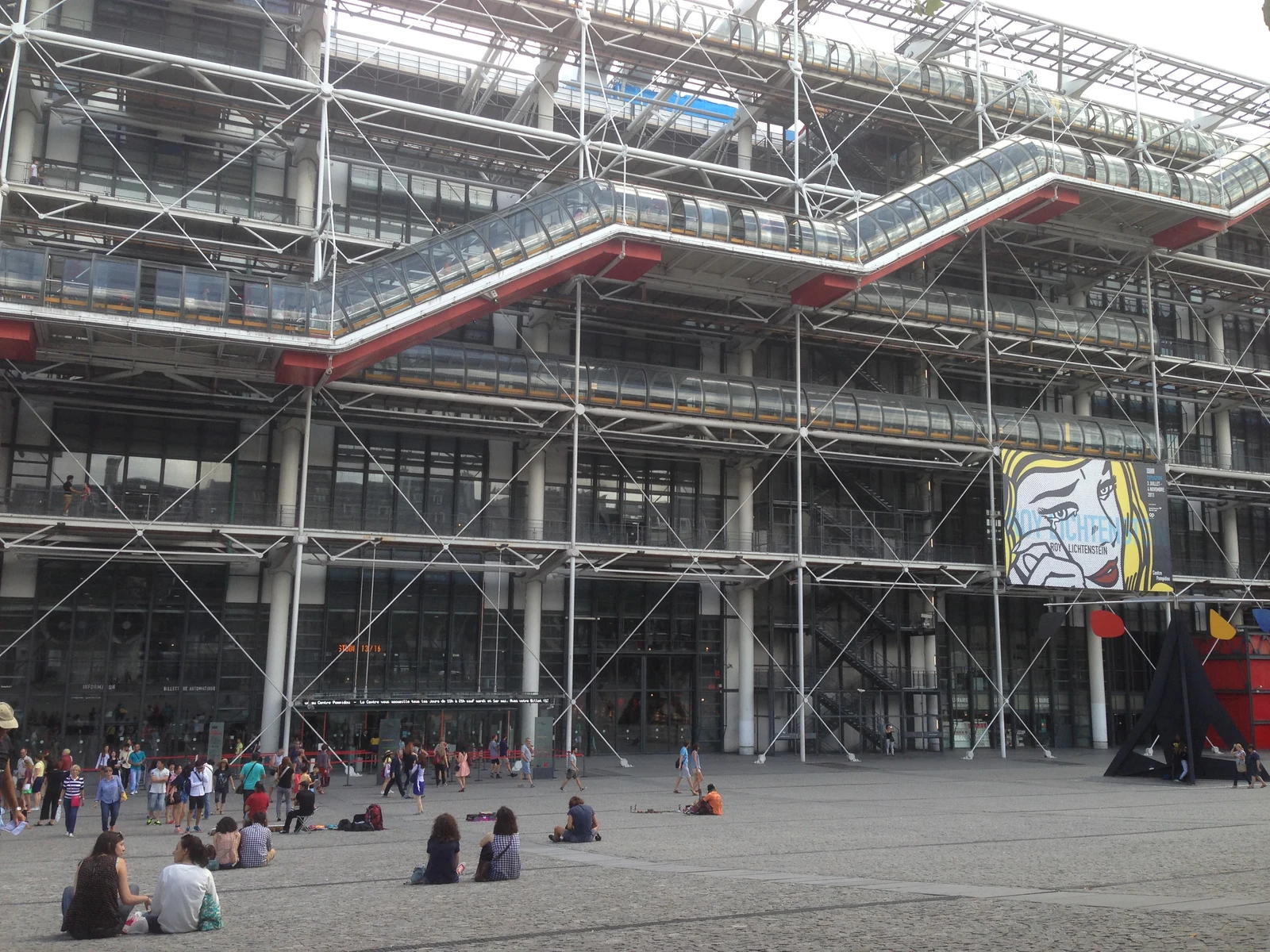
When the Centre Pompidou opened in January 1977, it was met with near-universal alarm. A cultural centre with all its mechanical services — ducts, escalators, pipes, electrical conduits — pulled to the exterior and colour-coded by function: blue for air, green for water, yellow for electrical, red for movement. The building was not merely provocative; it was a manifesto that the city read as an insult.
Fifty years on, it reads as a masterpiece. Piano and Rogers, winners of the 1971 competition at ages 33 and 37, proposed a building that treated its site in the Beaubourg quartier not as a container for art but as a generator of urban life. The piazza in front — sloping gently towards the building — has become one of the most reliably animated public spaces in Paris, filled with street performers, skaters, and tourists year-round.
The interior is a vast flexible loft: 7,500 square metres per floor, entirely column-free on the main levels, achieved by pushing all structure to the perimeter. The escalator tube climbing the facade offers one of the finest views of Rooftop Paris.
The building houses the Musée National d'Art Moderne (one of the largest modern art collections in the world), a public library, a cinema, and performance spaces. Note: the building is undergoing major renovation and is closed until 2030 — but the exterior, the piazza, and the rooftop restaurant remain accessible and the building itself is the primary reason to visit.
Culture · MuseumArchitecture · Landmark
Nearby places
More in ParisAll →
Comments
Sign in to leave a comment.
Access conditions may change. Please check current opening and access information with the venue before visiting.
Something wrong or missing?