Must Visit
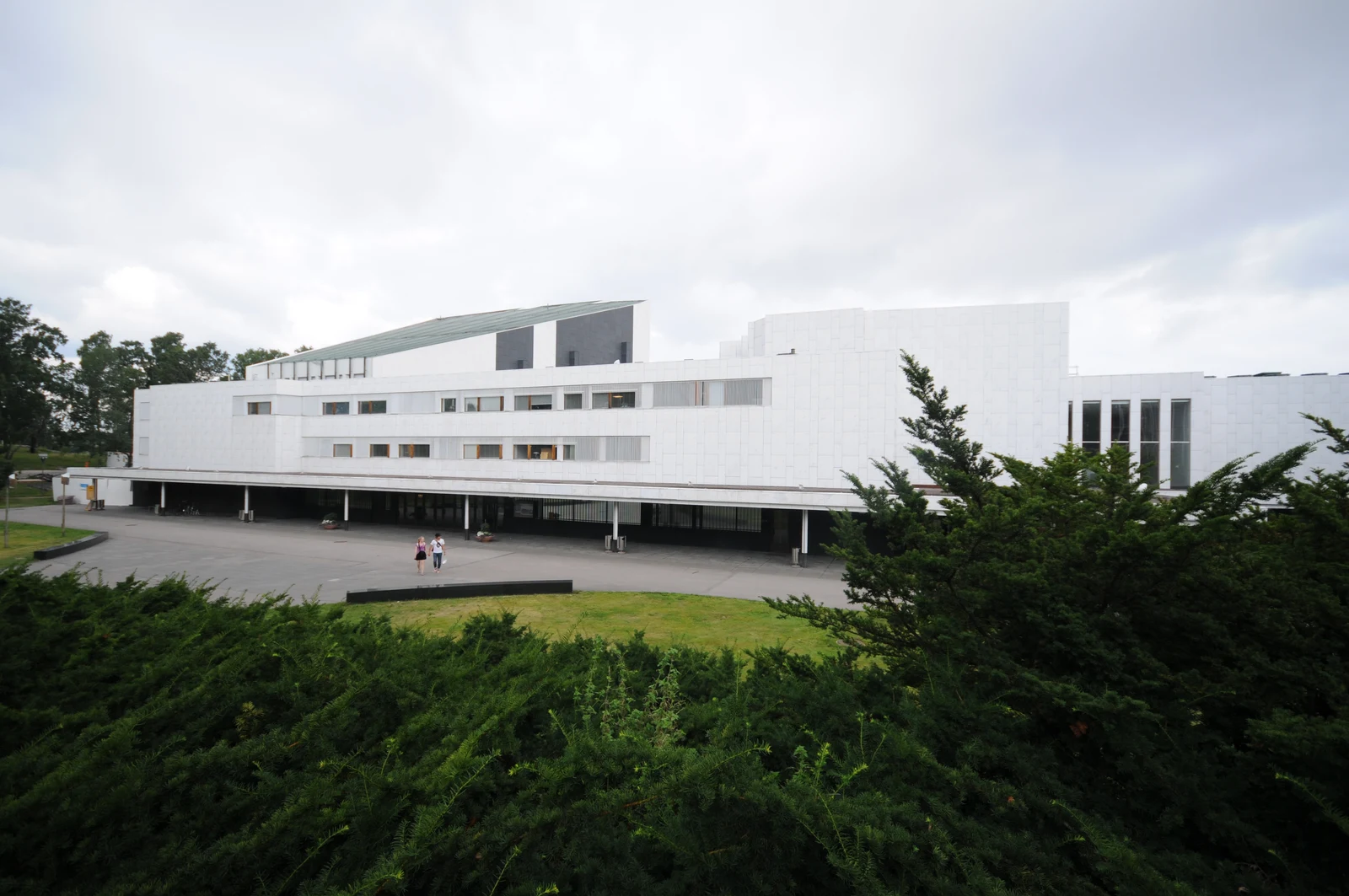
Finlandia Hall
Alvar Aalto · 1971
ArchitectAlvar Aalto
Year1971
LocationHelsinki, Finland
Coordinates60.1757° N, 24.9336° E
TypeArchitecture · Modernism, Culture · Performance Space
StatusMust Visit
Sign in to save and check in to this place.
About this place
Alvar Aalto's 1971 congress and concert hall on Helsinki's Töölönlahti Bay — a long white Carrara marble volume anchoring the western edge of the city centre.
Finlandia Hall, completed by Alvar Aalto in 1971 and extended in 1975, is Helsinki's principal congress and concert venue — a long, white volume clad in Carrara marble, set on the western shore of Töölönlahti bay and intended by Aalto to form one element of an unrealised larger plan for the city's monumental core.
The building's siting is deliberate: Aalto positioned it to terminate the westward view across the bay from the Parliament House, completing an axis between the Neo-Classical civic buildings of Mannerheimintie and the water. The plan he envisaged — which would have extended this axis with a new opera house and further cultural buildings — was never fully realised, but Finlandia Hall functions independently as one of the city's most recognisable landmarks.
The Carrara marble cladding, chosen for its colour against the grey Finnish sky, has been controversial: the marble proved thermally unstable in the Finnish climate and began to bow and crack within years of completion. It has been replaced in phases, most recently in a comprehensive renovation completed in 2012.
Inside, the main concert hall and smaller congress hall are stacked above a generous public foyer at ground level. Aalto designed the auditorium ceiling in a characteristic fan-wave form that appears throughout his concert halls — the Kultuuritalo in Helsinki, the Essen Opera House, the MIT auditorium — and which distributes sound through the space without diffusing it.
The building is actively used as a venue and is accessible when events permit. The lakeside setting, and the view back toward the Parliament building, are best appreciated in the long light of a Finnish summer evening.
Architecture · ModernismCulture · Performance Space
More in HelsinkiAll →
Comments
Sign in to leave a comment.
Access conditions may change. Please check current opening and access information with the venue before visiting.
Something wrong or missing?