Must Visit
Museu de Serralves
Álvaro Siza Vieira · 1999
ArchitectÁlvaro Siza Vieira
Year1999
LocationPorto, Portugal
Coordinates41.1569° N, 8.6567° W
TypeCulture · Museum, Architecture · Contemporary Architecture
StatusMust Visit
Sign in to save and check in to this place.
About this place
Álvaro Siza Vieira's canonical contemporary art museum set within a 1930s Art Deco estate in Porto. Opened 1999, one of Europe's finest examples of late-modern museum architecture.
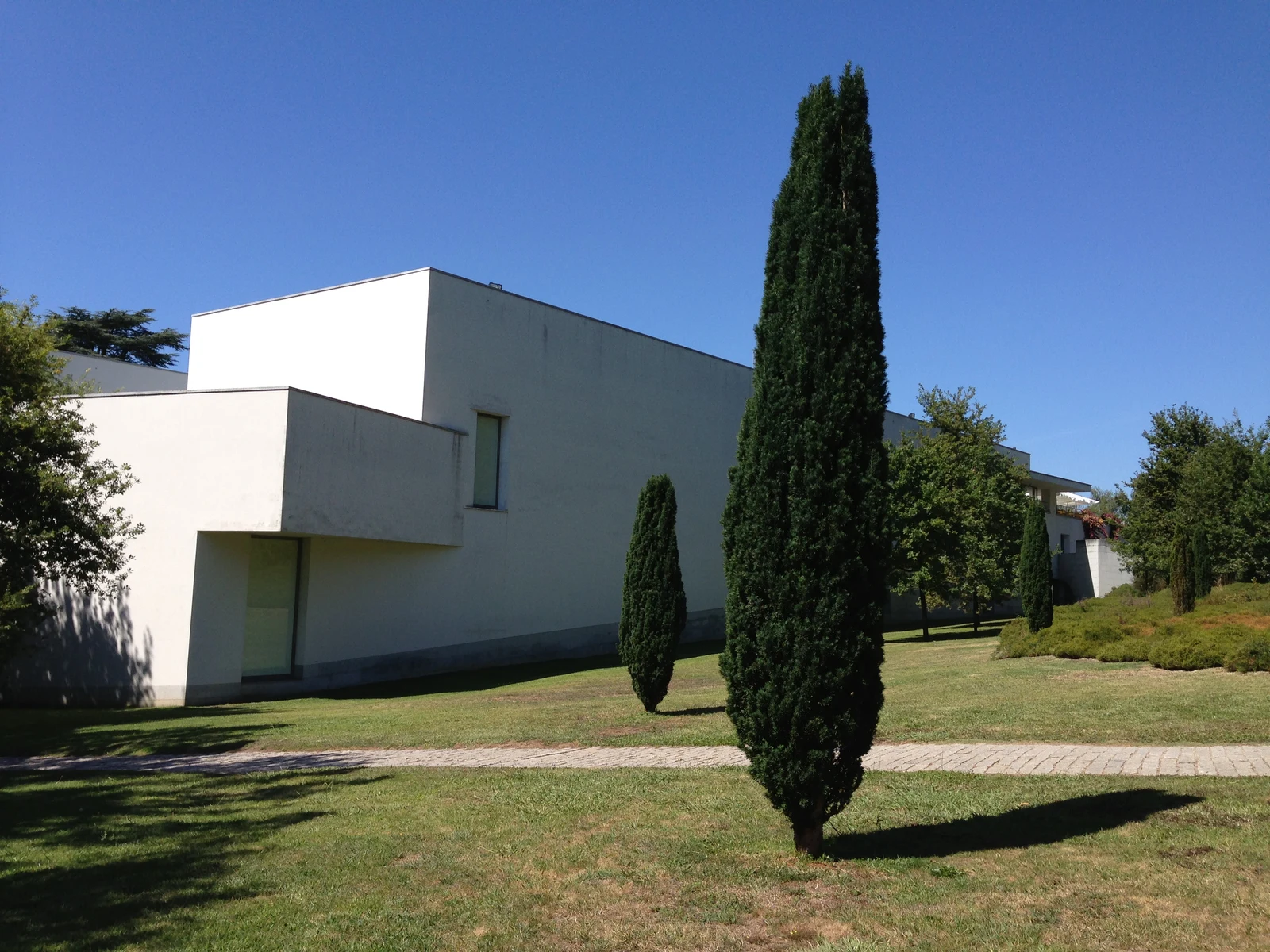
Museu de Serralves is the result of Álvaro Siza Vieira's most sustained institutional commission — a 13,000-square-metre contemporary art museum built within the grounds of a 1930s Art Deco estate on the western edge of Porto. Siza spent most of the 1990s developing the project, and the building that emerged in 1999 is a distillation of his architectural thinking: pure white rendered surfaces, rigorous geometry, and an acute sensitivity to light and landscape.
The plan unfolds as a sequence of interlocking volumes arranged around a central axis, each gallery calibrated to a different light condition. Siza avoids the grand gestures common to museum architecture of the period — there is no atrium, no signature staircase. Instead, the experience is built from thresholds: doorways sized to slow you down, ceiling heights that shift unexpectedly, views that frame the park at precise moments. Natural light enters through skylights and high clerestories, changing the character of each gallery across the day.
The relationship between building and landscape is essential. The museum sits within a 18-hectare park — one of Portugal's most significant designed landscapes, with gardens, woodland, and a 1930s Art Deco villa — and Siza's building negotiates this setting with great care, its garden-facing facades stepping down to meet the ground at a domestic scale.
In 2024, Siza completed a new angular wing expanding the exhibition space, maintaining the white rendered language while introducing a more angular geometry. The permanent collection spans Portuguese and international contemporary art from the 1960s to the present.
Culture · MuseumArchitecture · Contemporary Architecture

More in PortoAll →
Comments
Sign in to leave a comment.
Something wrong or missing?
