Must Visit
Neue Nationalgalerie
Ludwig Mies van der Rohe; David Chipperfield Architects (restoration) · 1968
ArchitectLudwig Mies van der Rohe; David Chipperfield Architects (restoration)
Year1968
LocationBerlin, Germany
Coordinates52.5070° N, 13.3676° E
TypeArchitecture · Modernism, Culture · Museum
StatusMust Visit
Sign in to save and check in to this place.
About this place
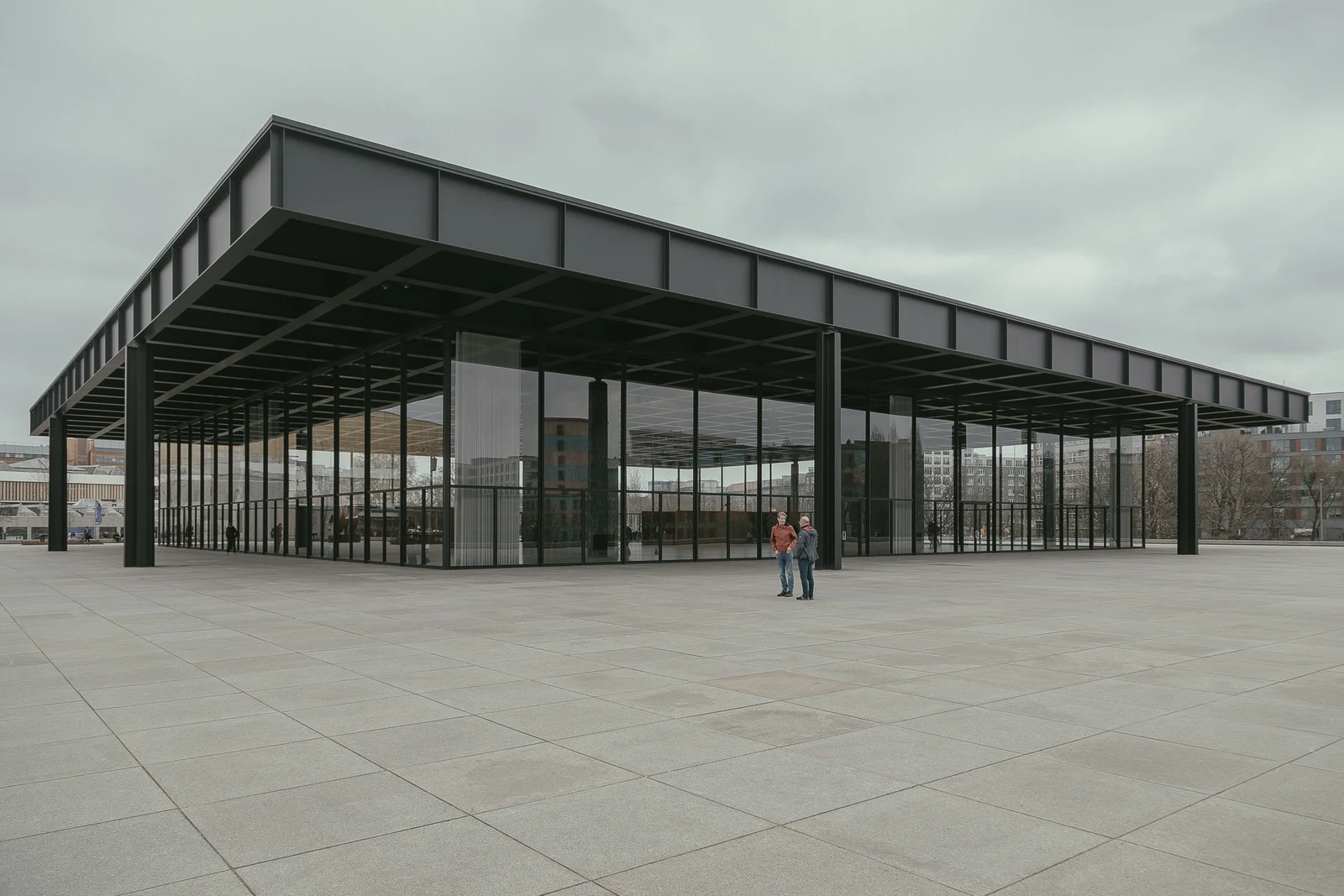
Mies van der Rohe's steel-and-glass temple of modernism (1968), meticulously restored by Chipperfield in 2021. One of the purest structural statements of the 20th century.
The Neue Nationalgalerie is Mies van der Rohe's final completed building and the most distilled expression of his lifelong structural logic. Completed in 1968, two years before his death, the building is essentially a single act: a 64.8-metre-square steel roof, hovering above a glass enclosure on just eight cruciform columns. The roof carries its own weight and the weight of every technical system; the glass walls below are entirely non-structural, enclosing the space without touching the roof above.
The building sits on a raised granite podium at the Kulturforum, at the edge of the Tiergarten. From the street it reads as pure transparency — you see through the main hall to the city beyond, the roof plane floating above. This creates the fundamental paradox of the space: it is one of the most magnificent rooms of the 20th century and one of the hardest to use for conventional exhibition. The columns are fixed, the light is uncontrollable, the scale is unforgiving. The main hall hosts temporary shows; the permanent collection lives in the quieter basement galleries below.
After more than fifty years of wear, David Chipperfield Architects undertook a comprehensive six-year restoration completed in 2021. The brief was conservative: clean, repair, replace only the irreplaceable. Steel profiles, travertine paving, bronze hardware and the original curtain-wall system were all studied and matched exactly. The result is the building as Mies intended — arguably better than its rushed 1968 opening.
Stand in the centre of the main hall. Note how the columns sit well inside the glass perimeter, making the corners entirely free. Watch the light shift through the day. Then go down to the basement: lower ceilings, intimate scale, natural light from the sunken courtyard — a completely different spatial register from the same architect.
Architecture · ModernismCulture · Museum
Nearby places
More in BerlinAll →
Comments
Sign in to leave a comment.
Access conditions may change. Please check current opening and access information with the venue before visiting.
Something wrong or missing?