Worth Visiting
Haus Lemke
Mies van der Rohe · 1932
ArchitectMies van der Rohe
Year1932
LocationBerlin, Germany
Coordinates52.5493° N, 13.4908° E
TypeArchitecture · Historic Architecture, Culture · Museum
StatusWorth Visiting
Sign in to save and check in to this place.
About this place
Mies van der Rohe's last built work in Germany before emigrating — a modest 1932 villa in Berlin-Hohenschönhausen, now a museum. One of the purest expressions of his brick period.
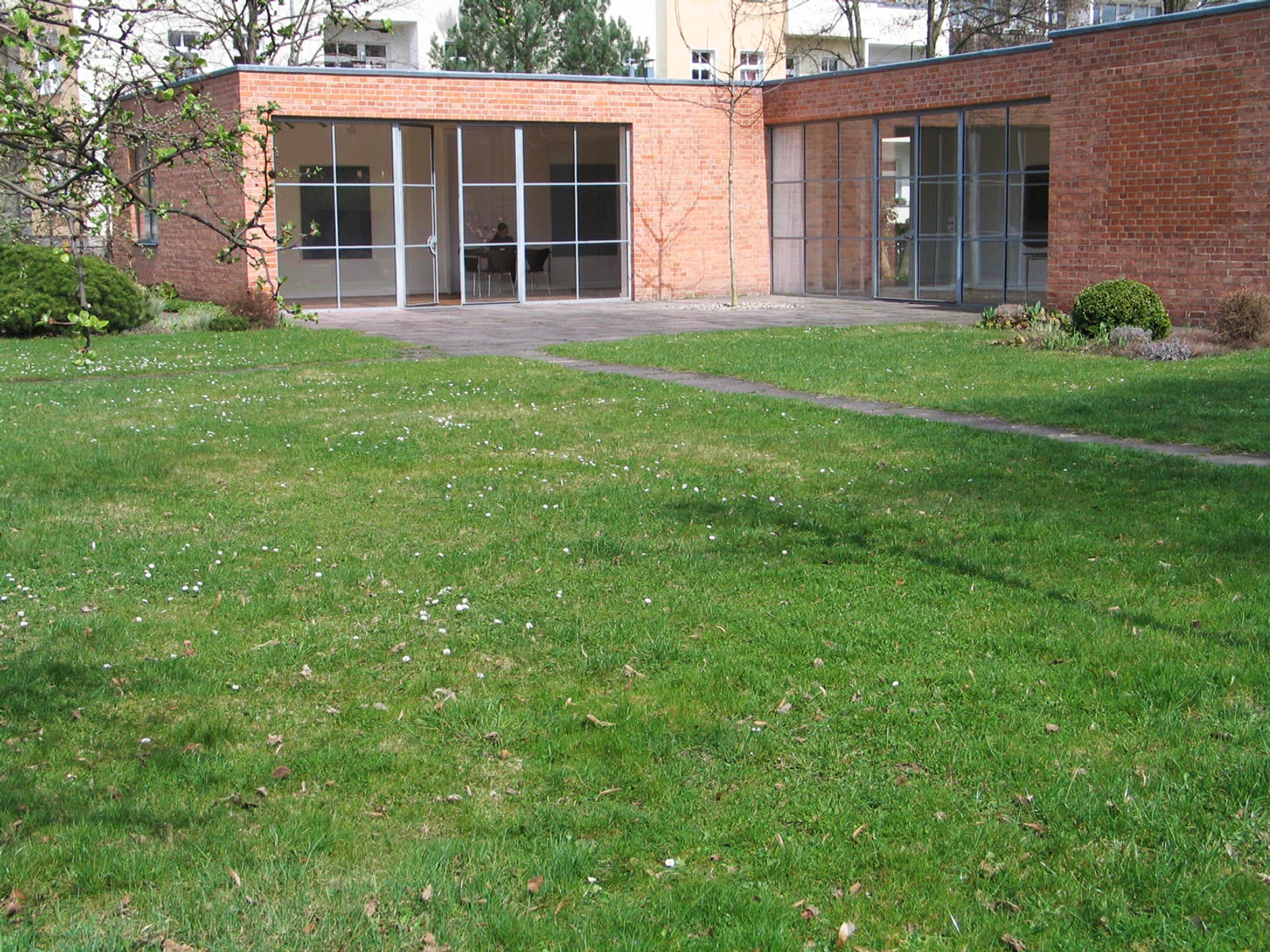
Haus Lemke is the last building Mies van der Rohe completed in Germany before leaving for the United States in 1938. Built in 1932 for Karl and Martha Lemke on the shore of the Obersee lake in what is now Berlin-Hohenschönhausen, it is a small, single-storey villa — intimate in scale but precise in every decision.
The house belongs to Mies's brick period, the work that preceded his glass-and-steel phase in America, and it demonstrates a spatial fluency that the later canonical works can sometimes obscure. The plan is L-shaped, wrapping around a garden courtyard that opens toward the lake. Interior and exterior are held in careful tension: large sliding glass doors dissolve the boundary between the living room and the terrace, while the brick walls anchor the house firmly in the ground. The proportions are classical in restraint but modern in their refusal of ornament.
The building's postwar history adds a layer of complexity. The Lemkes were forced to leave the house by the Nazi regime in 1945, and after the war it fell within East Berlin, serving variously as a boathouse and a KGB canteen before being returned to the original owners in the 1990s. It opened as a museum in 2000 and is now operated by the Stiftung Stadtmuseum Berlin.
The museum offers guided tours through the restored interiors — sparsely furnished to Mies's original intentions — and the garden, which preserves the lakeside setting he designed around. For anyone interested in the continuity between Mies's European and American phases, this is the essential connective tissue.
Architecture · Historic ArchitectureCulture · Museum
Nearby places
More in BerlinAll →
Comments
Sign in to leave a comment.
Access conditions may change. Please check current opening and access information with the venue before visiting.
Something wrong or missing?