Worth Visiting
Fondació Joan Miró
Josep Lluís Sert · 1975
ArchitectJosep Lluís Sert
Year1975
LocationBarcelona, Spain
Coordinates41.3684° N, 2.1597° E
TypeCulture · Museum, Architecture · Museum Building
StatusWorth Visiting
Sign in to save and check in to this place.
About this place
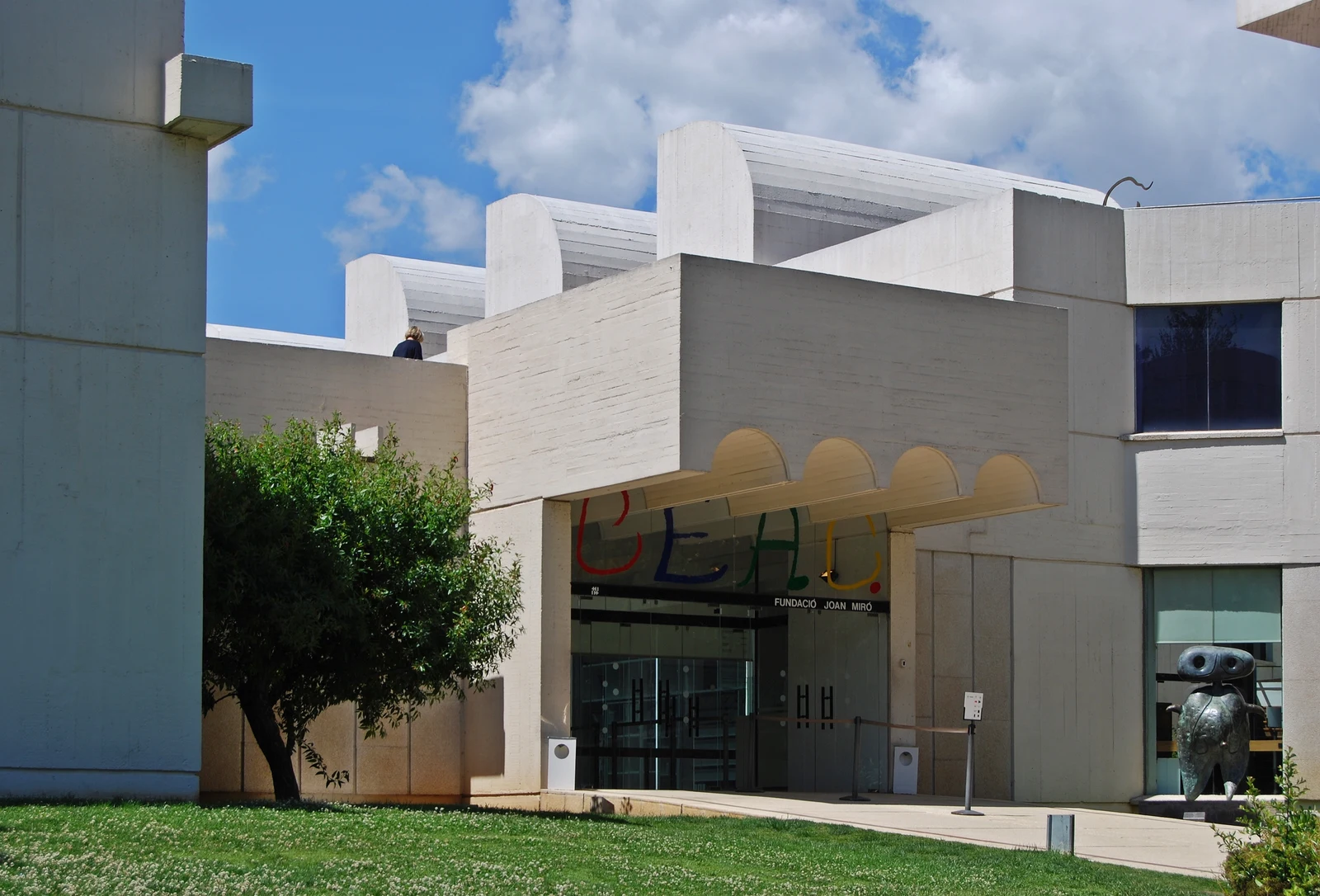
Josep Lluís Sert's luminous 1975 museum dedicated to Joan Miró — white concrete volumes and skylights flooding the galleries with Mediterranean daylight.
The Fondació Joan Miró occupies a hilltop position in Montjuïc park and is one of the great examples of how architecture can be designed in genuine dialogue with the art it houses. Josep Lluís Sert — a close friend of Miró's and the last president of CIAM — designed the building specifically for the artist's work, and the result is one of the most sympathetic museum spaces in Europe.
The building is organised as a series of interlocking white concrete volumes grouped around open courtyards. Sert's controlling concern was natural light: the galleries receive daylight through roof lanterns, clerestory windows, and skylights designed to eliminate direct sun while maintaining the colour quality of Mediterranean outdoor light. The effect is an interior luminosity that makes the colours in Miró's paintings read exactly as the artist intended.
The plan is deliberately non-hierarchical — there is no single main axis or imposed circulation route. Visitors move through a sequence of varied spaces, some intimate and low-ceilinged, others tall and voluminous, with the courtyards providing moments of transition and rest. Tapestries, sculptures, and paintings are distributed throughout rather than confined to galleries by medium.
Sert designed the building for expansion; a new wing by Jaume Freixa was added in 1988 and respects the original language. The permanent collection covers Miró's entire career, and temporary exhibitions occupy the newer spaces. On a clear day, the rooftop terrace offers views across Barcelona to the sea.
Culture · MuseumArchitecture · Museum Building
Nearby places
More in BarcelonaAll →
Comments
Sign in to leave a comment.
Access conditions may change. Please check current opening and access information with the venue before visiting.
Something wrong or missing?