Visit if Near
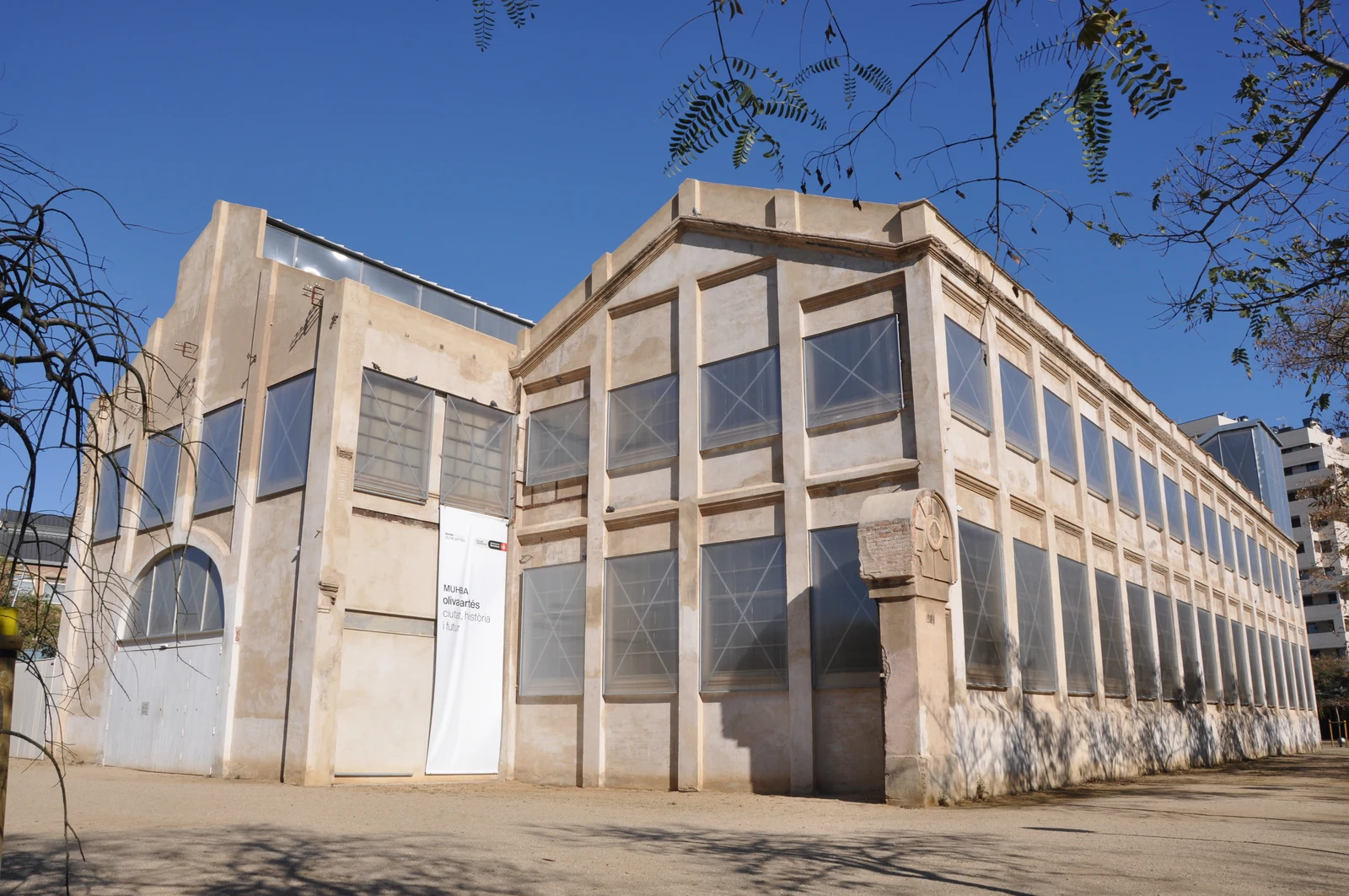
MUHBA Oliva Artés
BAAS Arquitectura · 2020
ArchitectBAAS Arquitectura
Year2020
LocationBarcelona, Spain
Coordinates41.4299° N, 2.1859° E
TypeCulture · Museum, Architecture · Adaptive Reuse
StatusVisit if Near
Sign in to save and check in to this place.
About this place
A preserved early-20th-century metalworking workshop in Sant Andreu, now a branch of the Museu d'Història de Barcelona — one of the few surviving examples of pre-war industrial craft infrastructure in the city, maintained as a working museum of mechanical and engineering history.
The Oliva Artés workshop is a remarkably intact early-20th-century metalworking and engineering facility in the Sant Andreu district of Barcelona, now managed as a museum site by the Museu d'Història de Barcelona (MUHBA). The workshop was established by the Oliva Artés family and operated through much of the 20th century producing industrial machinery, railway components, and mechanical equipment — a representative example of the small and medium industrial enterprises that formed the backbone of Barcelona's manufacturing economy before deindustrialisation.
What makes the site unusual is its preservation: unlike most former industrial buildings in Barcelona, which have been converted beyond recognition or demolished, the Oliva Artés workshop survives with much of its original machinery, tooling, and spatial organisation intact. The cranes, lathes, presses, and assembly spaces remain in place, giving the museum an authenticity rare in industrial heritage — this is not a reconstruction or an interpretive display but the actual space of production, preserved in amber.
The Sant Andreu neighbourhood context is itself interesting: the district retains traces of its working-class and industrial history that are increasingly rare in central Barcelona, and visiting the Oliva Artés workshop gives a sense of the city's 20th-century urban and economic character that is hard to access elsewhere.
The museum is a specialist destination, most rewarding for visitors with an interest in industrial history, mechanical engineering, or the social history of Barcelona's labour and manufacturing culture. Casual visitors may find the site less immediately compelling than the city's more prominent institutions.
Culture · MuseumArchitecture · Adaptive Reuse
Nearby places
More in BarcelonaAll →
Comments
Sign in to leave a comment.
Access conditions may change. Please check current opening and access information with the venue before visiting.
Something wrong or missing?