Worth Visiting
Jardí Botànic de Barcelona
Carlos Ferrater · 1999
ArchitectCarlos Ferrater
Year1999
LocationBarcelona, Spain
Coordinates41.3639° N, 2.1519° E
TypeLandscape · Botanical Garden
StatusWorth Visiting
Sign in to save and check in to this place.
About this place
Carlos Ferrater's terraced botanical garden on Montjuïc — a rigorous landscape project that organises Mediterranean and world flora through a precise geometric grid set against the city's skyline.
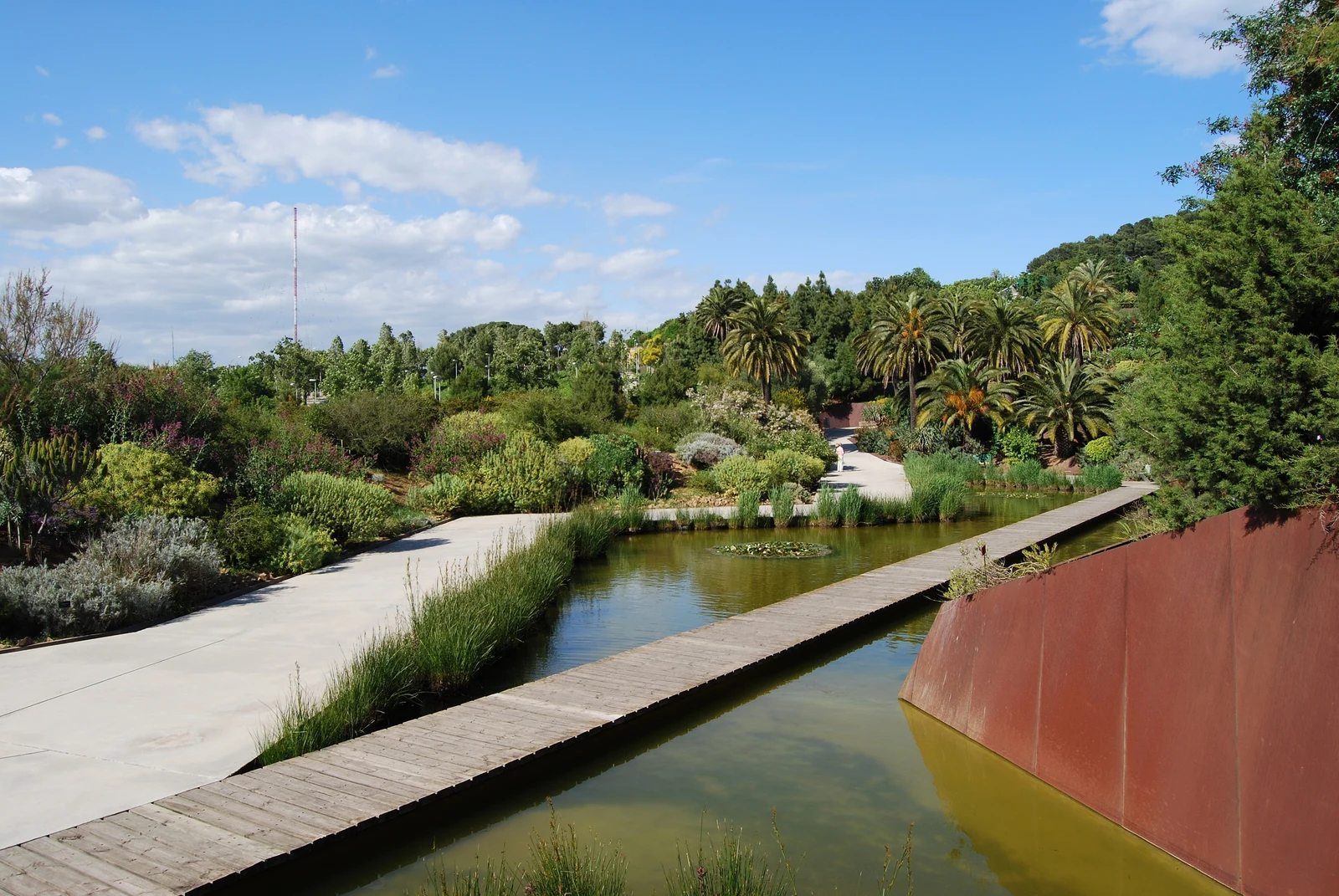
The Jardí Botànic de Barcelona, opened in 1999 on the slopes of Montjuïc, is one of the most accomplished landscape architecture projects in Spain. Designed by Carlos Ferrater — the Barcelona architect known for rigorous, geometrically structured work — the garden orders a difficult sloping terrain through a triangular grid that divides the site into wedge-shaped planting beds, each housing a distinct Mediterranean climate zone: California, Australia, South Africa, the Canary Islands, Chile, and the Mediterranean basin itself.
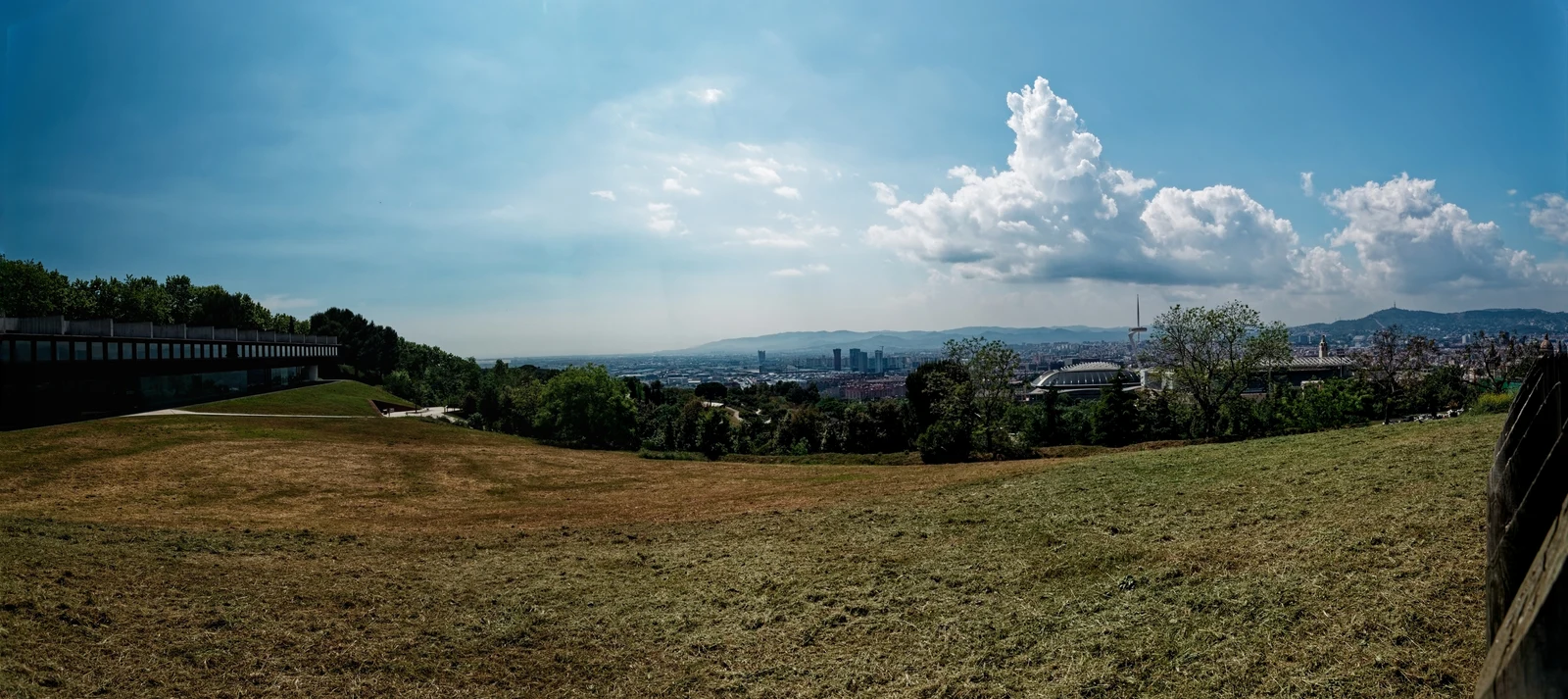
The concept is simultaneously botanical and spatial: the geometry is not imposed on the landscape but derived from it, following the contours of Montjuïc's hillside and creating a series of views — some framed toward the plants, others opening over Barcelona to the sea. The paths follow the grid and lead visitors through an alternating sequence of enclosure and panorama that makes the garden feel larger and more varied than its area suggests.
Ferrater's treatment of the hard landscape — the retaining walls, paths, and structural elements — uses concrete and weathering steel in a material register that sits comfortably against the planted areas without competing with them. The structure is present but not assertive: it serves the botanical programme while providing the spatial armature that makes the garden coherent.
The Jardí Botànic is visited primarily for the plants, which include many species not easily seen elsewhere in Europe. But it is also a model of how contemporary landscape architecture can engage a site's topography intelligently — the geometry is not a diagram imposed from above but a response to the specific conditions of place.
Landscape · Botanical Garden
Nearby places
More in BarcelonaAll →
Comments
Sign in to leave a comment.
Access conditions may change. Please check current opening and access information with the venue before visiting.
Something wrong or missing?